The best heart rate monitor can make training data more accurate, whether you run, cycle, lift weights, or track general wellness. The right choice depends on comfort, device compatibility, measurement style, and how consistently you plan to wear it.
Our roundup includes chest straps, wearable monitors, a smartwatch-style tracker, and a fingertip pulse oximeter so you can match the technology to your goals and budget.
Best 10 Heart Rate Monitor Picks for 2026
Most Accurate Pick
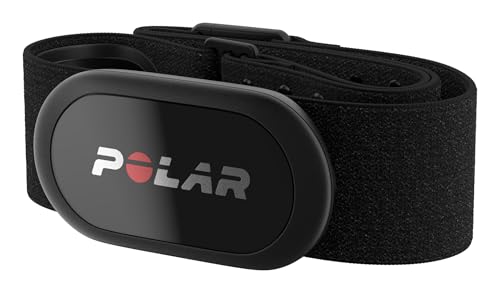
- Highly precise heart rate measurement
- Bluetooth, ANT+, and 5 kHz connectivity
- Waterproof with up to 400 hours of battery life
Best For: Athletes prioritizing accuracy and broad device compatibility
Best for Data-Driven Training

- Real-time heart rate and HRV data
- Running dynamics and workout recording
- Rechargeable battery lasts up to two months
Best For: Garmin athletes wanting detailed performance metrics
Most Comfortable Armband

- Soft, breathable armband design
- Pairs with up to three Bluetooth devices
- Up to 38 hours of operation per charge
Best For: Bluetooth users who prefer an armband over a chest strap
Best Value Garmin Strap

- Accurate heart rate and HRV transmission
- Up to one year of replaceable-battery life
- Machine-washable and rated to 3 ATM
Best For: Garmin users wanting a durable everyday monitor
Best Dual-Protocol Chest Strap

- ANT+ and Bluetooth connectivity
- Up to 800 hours of battery life
- IP67 water resistance for workouts
Best For: Cyclists, runners, and multi-device fitness users
Best Quick Rhythm Checks
KardiaMobile Personal Heart Monitor

- 30-second smartphone-based results
- No subscription or Wi-Fi required
- Compact, lightweight design
Best For: Portable, occasional personal heart rhythm checks
Best Value Training Strap
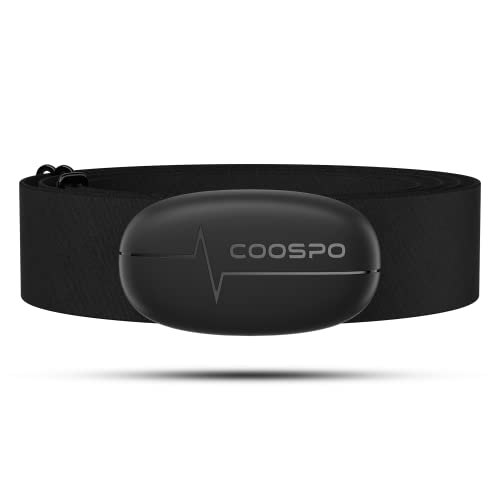
- Stated ±1 BPM heart rate data
- Bluetooth and ANT+ connectivity
- Works with apps and gym equipment
Best For: Multi-device training and indoor cycling
Best Fingertip Pick
Innovo Deluxe iP900AP Pulse Oximeter

- Pulse-rate and SpO2 spot checks
- Plethysmograph and perfusion index
- Includes batteries and lanyard
Best For: Portable home and exercise-related spot checks
Best Chest Strap
POWR LABS Bluetooth ANT+ Heart Rate Monitor
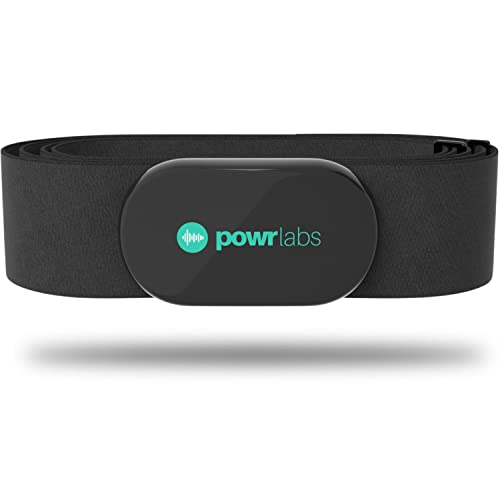
- Dual Bluetooth and ANT+ connectivity
- Stated clinical ±1 BPM accuracy
- 400+ hour replaceable-battery life
Best For: Multi-device training and fitness apps
Best Smartwatch Value

- Continuous heart-rate and SpO2 tracking
- 24+ sports modes and sleep monitoring
- 5–7 days of battery life
Best For: Everyday wellness tracking and smartwatch features
Most Accurate Pick – Polar H10 Heart Rate Monitor
The Polar H10 is a strong choice when accurate heart rate data is the priority. This chest-strap heart rate monitor supports Bluetooth, ANT+, and 5 kHz connections, with simultaneous Bluetooth pairing options for compatible equipment and devices.
Best For: Athletes who want highly precise readings, broad connectivity, and waterproof workout tracking.
Pros:
- Recognized for precise heart rate measurement.
- Supports Bluetooth, ANT+, and 5 kHz connections.
- Waterproof, with internal memory for multiple hours of data.
- Battery lasts up to 400 hours.
Cons:
- Chest-strap design may be less comfortable than an armband for some users.
- Uses a replaceable CR2025 button-cell battery rather than a rechargeable battery.
The Polar H10 is a practical heart rate monitor for users who need dependable accuracy and compatibility across workout equipment, phones, tablets, and computers.
Best for Data-Driven Training – Garmin HRM 600
The Garmin HRM 600 is a feature-rich heart rate monitor for athletes who want more than basic pulse data. It sends real-time heart rate and HRV information to compatible Garmin devices and apps, while also recording workouts when wearing a watch is impractical.
Best For: Garmin users focused on running dynamics, swim tracking, and detailed workout records.
Pros:
- Transmits real-time heart rate and HRV data.
- Captures running dynamics such as stride length and vertical oscillation with a compatible smartwatch.
- Records and syncs workouts, including heart rate, calories, speed, and distance.
- Machine-washable strap and rechargeable battery lasting up to two months.
Cons:
- Advanced running metrics require a compatible smartwatch.
- Its feature set may be more than casual exercisers need.
The HRM 600 stands out for Garmin ecosystem users who want detailed performance metrics, activity recording, and support for indoor and swim workouts.
Most Comfortable Armband – COROS Heart Rate Monitor
The COROS Heart Rate Monitor uses a soft, breathable armband instead of a traditional chest strap. This heart rate monitor connects by Bluetooth to up to three devices at once and automatically powers on when worn, making it convenient for sports and structured workouts.
Best For: Athletes who prefer an armband and use Bluetooth-enabled watches, trainers, phones, or fitness apps.
Pros:
- Soft, breathable band designed for comfortable wear.
- Connects simultaneously with up to three Bluetooth devices.
- Wear detection powers the monitor on and off automatically.
- Provides up to 38 hours of operation or 80 days of standby time.
Cons:
- Bluetooth-only connectivity; it is not compatible with ANT+.
- Designed for sports and activities rather than daily heart rate tracking.
- The listed large band fits arm sizes from 9.4 to 16.9 inches.
Choose the COROS monitor when comfort and quick setup matter more than ANT+ support or all-day health tracking. Its removable sensor also simplifies cleaning.
Best Value Garmin Strap – Garmin HRM 200
The Garmin HRM 200 is a straightforward heart rate monitor for users who want accurate real-time heart rate and HRV data without the added performance features of Garmin’s higher-end model. It works with compatible Garmin devices, fitness equipment, apps, and smartphones.
Best For: Garmin users seeking a durable, low-maintenance strap for regular workouts.
Pros:
- Transmits real-time heart rate and HRV data.
- Compatible with Garmin smartwatches, cycling computers, equipment, apps, and smartphones.
- Machine-washable strap for easier maintenance.
- User-replaceable battery lasts up to one year.
Cons:
- Provides fewer specialized training features than the HRM 600.
- Uses a replaceable battery rather than a rechargeable one.
- Requires compatible devices or apps to view transmitted data.
The HRM 200 is a sensible everyday option for Garmin users who value long battery life, durability, and easy cleaning over advanced running dynamics.
Best Dual-Protocol Chest Strap – GEOID HS500
The GEOID HS500 is a practical heart rate monitor for athletes who want chest-strap accuracy with both ANT+ and Bluetooth connectivity. Its redesigned algorithms are intended to reduce movement and sweat interference, while the replaceable CR2032 battery provides up to 800 hours of use.
Best For: Cyclists, runners, and fitness users connecting to sports watches, bike computers, smartphones, apps, or compatible gym equipment.
Pros:
- Supports both ANT+ and Bluetooth connections.
- Offers up to 800 hours of battery life with a replaceable CR2032 battery.
- IP67 water resistance supports sweaty and rainy workouts.
- Flashing LED confirms readiness and connection.
Cons:
- Swimming is not recommended.
- Bluetooth should be connected through the app rather than directly through the phone settings.
With its long battery life, broad device compatibility, and workout-focused chest-strap design, the HS500 is a strong option for users who want flexible connectivity and minimal battery maintenance.
Best Quick Rhythm Checks – KardiaMobile Personal Heart Monitor
KardiaMobile is a compact heart rate monitor designed for quick readings with a compatible smartphone. Place your fingers or thumbs on its sensors and receive results in about 30 seconds, without a subscription, Wi-Fi, cords, or a computer.
Best For: Smartphone users seeking a compact, simple device for occasional personal heart rhythm checks.
Pros:
- Provides results in approximately 30 seconds.
- Requires no subscription, Wi-Fi, cords, or PC.
- Compact and lightweight design is easy to carry.
- FDA-cleared medical-grade personal heart monitor.
Cons:
- Designed to work with smartphones, so it is not a standalone display.
- Battery life is listed at 12 months.
KardiaMobile stands apart from exercise chest straps by focusing on convenient, on-demand checks. Its straightforward finger-contact operation makes it suitable for users who prioritize portability and quick smartphone-based readings.
Best Value Training Strap – COOSPO H6
The COOSPO H6 is a versatile heart rate monitor chest strap for real-time training data. It uses Bluetooth 4.0 and ANT+ to connect with fitness apps, sports watches, bike computers, and compatible gym equipment, while its stated accuracy is within ±1 BPM.
Best For: Indoor cyclists, runners, and gym users who need broad compatibility across apps and fitness equipment.
Pros:
- Provides real-time heart rate data with stated ±1 BPM accuracy.
- Supports simultaneous Bluetooth and ANT+ connection options.
- Works with many third-party apps, bike computers, sports watches, and gym machines.
- IP67 protection supports rainy-day training and sweat.
Cons:
- Battery life is up to 300 hours, shorter than some competing straps.
- The electrode areas should be moistened before use for stable transmission.
- It should not be used for swimming or soaked in water.
The H6 is a practical choice when compatibility matters most. Its dual wireless modes and wide equipment support make it especially useful for users moving between cycling computers, apps, sports watches, and gym machines.
Best Fingertip Pick – Innovo Deluxe iP900AP Pulse Oximeter
If you want a compact heart rate monitor for quick spot checks, the Innovo Deluxe iP900AP combines pulse-rate readings with blood-oxygen monitoring. Its plethysmograph and perfusion index can help you assess reading quality, while the adjustable display and auditory alerts add convenience.
Best For: Home users, athletes, climbers, skiers, bikers, and aviators who need portable pulse-rate and SpO2 checks.
Pros:
- Measures pulse rate and SpO2 with stated ±2% measurement accuracy.
- Plethysmograph and perfusion index help support reliable readings, including at low perfusion.
- Includes auditory alarms, pulse-detection beeps, adjustable brightness, batteries, and a lanyard.
Cons:
- It is a fingertip spot-check device rather than a continuous heart rate monitor.
- Readings require you to remain still during measurement.
- SpO2 measurement is listed for the 70%–100% range.
The iP900AP is a practical choice when portability and straightforward spot checks matter more than smartwatch features or workout logging. Its included batteries make it ready to use out of the box.
Best Chest Strap – POWR LABS Bluetooth ANT+ Heart Rate Monitor
For workout data and broad device compatibility, the POWR LABS chest strap is a practical heart rate monitor built around dual Bluetooth and ANT+ connectivity. It is designed to pair with Garmin, Peloton, cycling computers, smartwatches, and compatible fitness apps.
Best For: Cyclists, runners, indoor-training users, and athletes who want chest-strap readings across multiple devices and apps.
Pros:
- Supports dual Bluetooth and ANT+ connections with 400+ fitness apps and numerous popular devices.
- Offers stated clinical ±1 BPM accuracy at a lower price than major-brand models.
- Soft, seamless strap adjusts across a broad 24–61-inch range and provides over 400 hours of battery life.
- IPX67 sweatproof and water-resistant construction supports demanding training conditions.
Cons:
- The strap must be worn before pairing.
- It has no standalone display, so compatible equipment or an app is needed to view data.
- Chest-strap fit and sensor placement may be less convenient than a wrist-worn tracker.
The POWR LABS monitor is the strongest fit here for structured training, especially if you already use ANT+ or Bluetooth equipment. Its long battery life and sweat-resistant design reduce day-to-day maintenance.
Best Smartwatch Value – JYUAJOI 24/7 Fitness Tracker
If you prefer an all-day wearable, this JYUAJOI fitness tracker works as a heart rate monitor alongside sleep, blood-oxygen, activity, and smartwatch features. Its 1.47-inch color display shows real-time heart-rate data, while the companion app provides historical charts.
Best For: Users wanting everyday heart-rate tracking, sleep monitoring, activity modes, and phone notifications in one wearable.
Pros:
- Provides continuous heart-rate monitoring and real-time readings on the watch.
- Tracks blood oxygen, sleep stages, steps, distance, calories, and 24+ sports modes.
- Includes IP68 waterproofing, call and message alerts, music control, and breathing exercises.
- Offers 5–7 days of use after a stated two-hour charge.
Cons:
- Requires a compatible Android 10.0+ or iOS 10.0+ smartphone for Bluetooth features.
- It is not compatible with PCs, iPads, or tablets.
- Battery life is listed as 5–7 days, so it needs more frequent charging than the chest strap.
This tracker suits shoppers who want heart-rate monitoring integrated with daily wellness and notification features rather than a dedicated training sensor. The large display and multiple sports modes make it versatile for everyday use.
How We Picked the Best Heart Rate Monitors
We focused on the features that matter most in real-world use: heart-rate accuracy, connection options, comfort, battery life, water resistance, app compatibility, and ease of setup. Chest straps typically suit serious training because they measure electrical heart signals close to the chest, while wrist and watch-style devices prioritize convenience. A pulse oximeter serves a different purpose, offering spot checks of oxygen saturation and pulse rather than continuous workout tracking.
We also considered compatibility with common fitness ecosystems, including Garmin, Polar, Peloton, cycling apps, smartphones, and ANT+ or Bluetooth-enabled equipment. Product claims and specifications should be checked against your specific phone, watch, bike computer, or training platform before purchase.
Quick Comparison
| Type | Best For | Main Advantage | Potential Limitation |
|---|---|---|---|
| Chest strap | Training accuracy | Responsive readings during intense exercise | Requires wearing a strap around the chest |
| Arm or wearable monitor | Everyday workouts | Usually easier and more comfortable to put on | May vary in accuracy by movement and fit |
| Smartwatch-style tracker | All-day wellness tracking | Combines heart rate, sleep, and activity data | May provide less responsive workout readings |
| Fingertip pulse oximeter | Occasional spot checks | Displays pulse and blood oxygen readings | Not designed for continuous training data |
Key Buying Factors for a Heart Rate Monitor
Measurement and Fit
Choose a chest strap if precise, fast-changing workout data is your priority. Fit matters: the sensor should sit securely against the skin without restricting breathing. Wearable and wrist-based options can be more convenient, especially for casual exercise and daily tracking.
Connectivity
ANT+ works well with many bike computers, fitness machines, and sports watches, while Bluetooth is useful for phones, tablets, and many training apps. Dual-protocol monitors offer the most flexibility. Confirm whether your preferred device supports simultaneous connections if you want to record data in more than one place.
Battery and Durability
Long battery life reduces maintenance, particularly for frequent athletes. Water resistance is helpful for sweaty workouts and outdoor training, but check the stated rating before swimming. Removable batteries can be convenient, while rechargeable designs reduce the need to keep replacement cells available.
Health Features and Limitations
Some products track sleep, blood oxygen, or other wellness metrics, but these features should not be treated as medical diagnosis. If you need monitoring for a medical condition, ask a qualified healthcare professional which device and measurement method is appropriate.
Who Should Buy Which Heart Rate Monitor?
For serious runners, cyclists, and structured training: Choose a reliable chest strap with ANT+ and Bluetooth, such as the Polar, Garmin, COROS, GEOID, COOSPO, or POWR LABS options, based on your preferred ecosystem and budget.
For Garmin users: A Garmin HRM model is the simplest fit when you already use a compatible Garmin watch or cycling computer and want integrated training data.
For comfort and everyday use: Consider a wearable or watch-style tracker with continuous monitoring, sleep tracking, and activity features.
For occasional pulse and oxygen checks: A fingertip pulse oximeter is more appropriate than a workout chest strap, but use it only as directed and seek medical guidance for concerning readings or symptoms.