Advanced players need more than a basic ball launcher. The right table tennis robot should reproduce demanding spins, vary placement accurately, and support structured drills that translate to real match play.
We selected 10 training robots with features such as programmable trajectories, app or remote control, ball recycling, adjustable speed, and multi-spin practice. Use the guide below to narrow your choices by training goals, space, and budget.
Best 10 Table Tennis Robots for Advanced Players Picks for 2026
Advanced Drill Control

- 576 pre-saved trajectories
- Remote and app control
- Adjustable speed, spin, landing, and height
Best For: Advanced players seeking deeply customizable solo drills
Recycling-Net Value Pick

- Recycling net included
- Adjustable spin, speed, and oscillation
- Supports direct and indirect serves
Best For: Players wanting convenient ball recycling and manual drill adjustment
Portable Spin Training
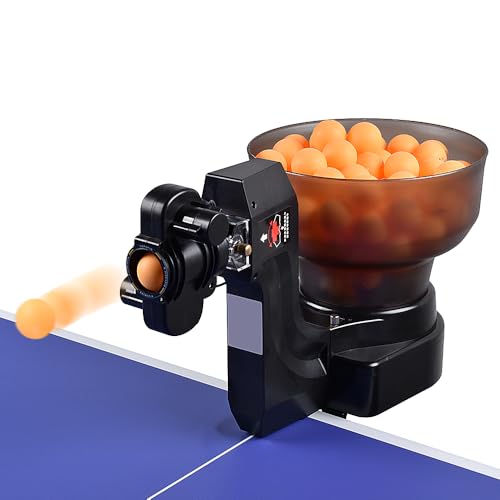
- Nine spin modes with dual motors
- 8.9–76 mph adjustable speed
- 120-ball hopper and automatic oscillation
Best For: Advanced players practicing spin variation and reaction speed
Smart Preset Practice
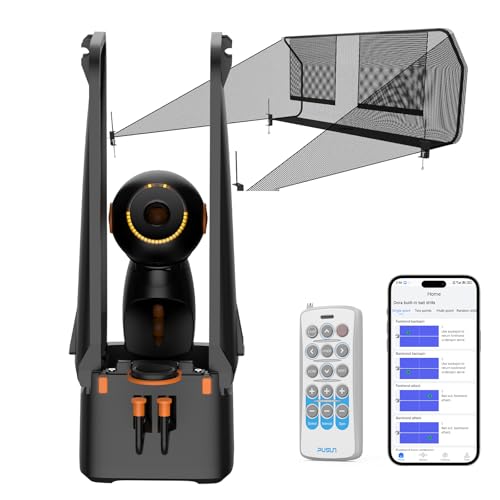
- Three-motor serving system
- Preset drills with app and remote control
- 150-plus-ball recycling facility
Best For: Players wanting guided drills and extended automated sessions
Best All-Around Pick

- Wireless remote with memory buttons
- Adjustable speed, frequency, direction, and spin
- Serves up to 70 balls per minute
Best For: Solo players who want simple, adjustable multiball practice
Best for Programmable Drills

- 396 pre-saved ball trajectories
- App and E-Pad dual control
- Includes recycling net and customizable drills
Best For: Structured practice with repeatable, programmable routines
Best Budget Spin Trainer

- Creates 36 spinning-ball variations
- Supports topspin, backspin, and sidespin
- Compact and easy to install
Best For: Portable, budget-friendly spin practice
Best with Extra Features

- 264 pre-saved drills plus custom routines
- Remote and smartphone-app control
- Includes a ball recycling net
Best For: Versatile solo practice with easier ball recovery
Best for Drill Variety
NOVA S Pro App-Controlled Robot

- 522 preset drills with custom programming
- 21 speed and rotation levels
- Nine spin types with placement control
Best For: Precise, advanced training and coaching sessions
Best Coverage Control
DORA Smart Pro Triple-Motor Robot
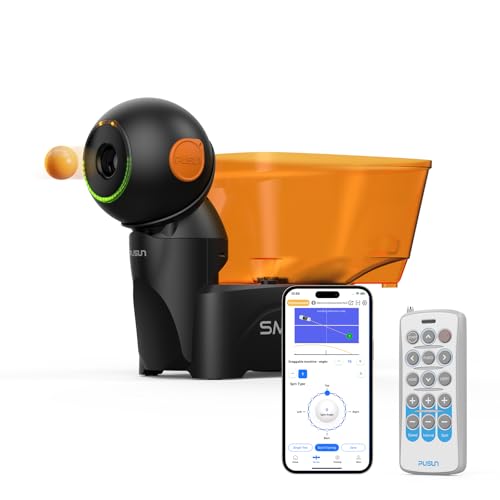
- Triple-motor launching system
- Full-table landing-point coverage
- Custom drills and varied serve combinations
Best For: Full-court placement and serve-pattern practice
Advanced Drill Control – PONGBOT 576-Trajectory Robot
For players comparing table tennis robots for advanced players, the PONGBOT stands out for its extensive drill programming. Remote and app control, 576 pre-saved trajectories, and adjustable training variables make it suited to structured solo practice.
Best For: Advanced players who want highly customizable drills and varied ball placement.
Pros:
- Includes 576 pre-saved trajectories for varied practice.
- Supports remote and app control.
- Allows adjustment of frequency, speed, rotation, landing point, and height.
- Automatic oscillation helps vary ball placement.
Cons:
- Its 14 kg weight may make moving and storing it less convenient.
- The supplied notes do not specify hopper capacity or warranty coverage.
This is the strongest fit when drill variety and fine-grained adjustment matter more than portability. Its programmable controls can support demanding, repeatable training sessions.
Recycling-Net Value Pick – Suz S201 Table Tennis Robot
The Suz S201 is a practical option among table tennis robots for advanced players who want spin, speed, and oscillation adjustments without manually collecting balls. Its included recycling net supports continuous practice, though setup depends on table compatibility and correct ball placement.
Best For: Players who value ball recycling and straightforward control-box adjustments.
Pros:
- Includes a machine recycling net for reduced ball pickup.
- Offers multiple options for spin, speed, and oscillation.
- Supports direct or indirect serves through head and control adjustments.
- Includes replacement-part support for normal wear and tear within one year.
Cons:
- Requires at least 20 balls below the feeding tube for proper operation.
- Only fits tables less than 2.5 inches thick.
- May require net tension, tilt, and head adjustments for reliable feeding.
The S201 offers useful training flexibility and convenient recycling, but it rewards careful installation. Check your table thickness and expect to fine-tune the feeding setup before serious practice.
Portable Spin Training – WAYMARK HP-07 Robot
For table tennis robots for advanced players who need portable match-style variation, the WAYMARK HP-07 combines dual motors with nine spin modes, automatic oscillation, and adjustable pitch. Its 120-ball hopper is designed for extended sessions, while the clamp mount fits tables up to 2.5 inches thick.
Best For: Advanced players training reaction speed, sidespin handling, and changing landing points.
Pros:
- Provides nine spin variations, including topspin, backspin, sidespin, and no-spin.
- Adjustable serving speed is listed from 8.9 to 76 mph.
- 120-ball hopper supports longer continuous sessions.
- Includes automatic oscillation and adjustable pitch angles.
Cons:
- Ball catch net is sold separately.
- Clamp compatibility is limited to tables up to 2.5 inches thick.
- The included package lists 50 balls, fewer than the hopper’s stated capacity.
The HP-07 is a compelling portable choice for players focused on spin recognition and movement. Its extended warranty and broad adjustment range add reassurance for regular home or club use.
Smart Preset Practice – PUSUN DORA Pro Robot
The PUSUN DORA Pro targets players seeking table tennis robots for advanced players with guided training features. Its three-motor serving system, preset drills, app or remote control, and real-time adjustments are paired with a 150-plus-ball recycling facility for uninterrupted practice.
Best For: Players who want preset drills, voice feedback, and high-capacity ball recycling.
Pros:
- Three serving motors are designed for stable, precise landing points.
- Built-in preset drills provide one-click training access.
- Supports app and remote control with real-time spin, speed, and landing adjustments.
- Recycling facility holds more than 150 balls and serves at 30–90 balls per minute.
Cons:
- The supplied notes do not specify table-thickness compatibility.
- Its listed dimensions suggest a larger setup than compact portable robots.
- The advanced voice and light features may be unnecessary for players who prefer simple controls.
The DORA Pro is built for structured, technology-assisted practice. It is especially attractive when automatic recycling and quick access to repeatable drills are priorities.
Best All-Around Pick – iPong V300 Training Robot
For players comparing table tennis robots for advanced players, the JOOLA iPong V300 offers straightforward control over frequency, speed, direction, and spin. Its wireless remote and adjustable oscillation make it practical for solo multiball practice without app setup.
Best For: Players who want adjustable topspin, backspin, speed, and side-to-side placement in a simple, portable machine.
Pros:
- Wireless remote includes memory buttons for on-the-fly adjustments.
- Controls ball frequency, speed, direction, topspin, and backspin.
- Serves up to 70 balls per minute, with settings from 30 to 70.
- Quick assembly requires no app or complicated instructions.
Cons:
- Its listed controls and features may be less extensive than those of programmable app-based robots.
- Regulation 40mm balls are required, but the supplied notes do not list balls as included.
The V300 is a sensible choice when you value quick setup and hands-on adjustments over a large library of programmed drills. A one-year manufacturer warranty is included.
Best for Programmable Drills – OMNI S Pro Robot
The OMNI S Pro stands out among table tennis robots for advanced players who want structured, repeatable training. It combines E-Pad and app control with customizable speed, spin, frequency, trajectory, and landing settings, plus a large library of saved drills.
Best For: Advanced players and coaches seeking programmable routines, detailed placement practice, and app-based training options.
Pros:
- Includes 396 pre-saved ball trajectories across 66 drills and multiple modes.
- Allows customization of speed, spin, frequency, trajectory, and landing.
- Offers dual control through the E Pad S remote and Pongbot app.
- Includes a ball-recycling net and an open drill library for shared routines.
Cons:
- 40mm or 40mm+ balls are not included.
- Its 19.8-pound listed weight is considerably higher than the compact alternatives in this roundup.
With extensive presets and customizable drills, the OMNI S Pro is the most training-focused option here. It is particularly well suited to players who want to repeat specific patterns and build structured practice sessions.
Best Budget Spin Trainer – HP-07 Ping Pong Robot
For budget-minded players exploring table tennis robots for advanced players, the HP-07 focuses on spin variety and simple operation. It can produce 36 spinning-ball combinations, including topspin, backspin, sidespin, and combinations, without requiring additional equipment for installation.
Best For: Players who want an affordable, portable machine for experimenting with varied spin and serve placement.
Pros:
- Offers 36 kinds of spinning balls.
- Supports topspin, backspin, sidespin, and combined spin.
- Compact design is easy to install and carry.
- Ball container holds approximately 110 balls.
Cons:
- Ping-pong balls are not included.
- Requires at least 15 balls for the machine to dispense properly.
- Landing points are not fixed, which may limit repeatable placement drills.
The HP-07 is a practical entry point for spin-focused training, especially if portability matters. Its less-programmable design makes it better for varied spin work than for precise, repeatable advanced routines.
Best with Extra Features – PONGBOT NOVA S Pro with Net
For players comparing table tennis robots for advanced players, the PONGBOT NOVA S Pro is a flexible training option with remote and smartphone-app control, 264 pre-saved drills, and support for custom routines. Its included recycling net can also simplify setup and ball collection.
Best For: Advanced players who want varied programmed and custom solo practice with convenient ball recovery.
Pros:
- Includes a ball recycling net to simplify setup.
- Offers both remote and smartphone-app control.
- Includes 264 pre-saved drills and custom-drill support.
- Backed by a one-year warranty.
Cons:
- Its plastic construction may feel less substantial than metal-heavy alternatives.
- The listed 4 kg weight may still require dedicated storage between sessions.
This is a practical choice for players who value training variety and quick setup. The included net and dual-control options make it especially convenient for structured solo sessions.
Best for Drill Variety – NOVA S Pro App-Controlled Robot
Among table tennis robots for advanced players, this NOVA S Pro stands out for detailed adjustment options. Its app and remote let you tune spin, speed, frequency, height, and landing point, while the machine supports near-net trajectories and highly customized training.
Best For: Advanced players and coaches who want precise control over spin, placement, pace, and programmed combinations.
Pros:
- Provides 21 speed levels, 21 rotation levels, and nine spin types.
- Supports 522 built-in preset drills and custom drill programming.
- Offers app-based landing-spot animation for placement practice.
- Supports count, combo, and double-bounce serving modes.
Cons:
- 40mm-plus balls and two AAA batteries are not included.
- The extensive settings may require time to learn and configure.
- A ball recycling net is not listed among the included components.
This model is the strongest fit when granular control matters more than simplicity. Its broad drill library and placement adjustments can support focused work on returns, combinations, and aggressive near-net play.
Best Coverage Control – DORA Smart Pro Triple-Motor Robot
The DORA Smart Pro is worth considering when shopping for table tennis robots for advanced players who want broad table coverage. Its triple-motor launching system is designed for stable serving, while app and remote controls support adjustments to spin, speed, frequency, landing point, and serve combinations.
Best For: Players seeking full-table placement practice and varied, realistic solo serving patterns.
Pros:
- Triple-motor launching system is designed for precise, stable serves.
- Provides global landing-point coverage across the table.
- Supports random serves, variable speed, frequency, spin, and combination serves.
- Allows custom personal drills alongside preset routines.
Cons:
- The supplied notes contain conflicting warranty information: three years in the bullets and 1.5 years in the details.
- No ball capacity or included ball supply is specified.
- Its listed dimensions are unusually long, so storage space should be checked.
The DORA Smart Pro is a compelling option for advanced users prioritizing placement coverage and serve variation. Confirm the warranty terms with the seller before purchase because the supplied listing information is inconsistent.
How We Picked the Best Table Tennis Robots for Advanced Players
We focused on features that matter once basic consistency is no longer the main challenge: spin variety, placement control, speed adjustment, drill customization, and repeatability. Models with preset drills can make practice easier, while programmable machines are more useful for players working on specific weaknesses such as backhand transitions, third-ball attacks, or wide forehand recovery.
We also considered practical details, including ball capacity, recycling nets, control methods, portability, setup requirements, and whether the robot is suitable for solo training on a regulation-size table.
Quick Comparison
| Feature | Why It Matters | What Advanced Players Should Look For |
|---|---|---|
| Spin control | Develops reliable responses to different serves and rallies | Multiple spin types with independent speed and frequency adjustment |
| Ball placement | Improves movement, recovery, and point construction | Wide oscillation, targeted zones, and programmable trajectories |
| Drill programming | Makes sessions more specific and repeatable | Custom sequences, saved routines, or a large preset library |
| Ball recycling | Reduces interruptions during high-volume practice | Integrated net and a capacity suited to your session length |
| Controls | Lets you change drills without stopping | Responsive remote, app, or both |
Key Buying Factors for Table Tennis Robots for Advanced Players
Spin, Speed, and Frequency
Look for independent controls rather than a single combined setting. Advanced practice often requires slow, heavy backspin, fast topspin, sidespin, or mixed sequences. A useful robot should also allow you to adjust ball frequency so you can prioritize technique, footwork, or reaction speed.
Trajectory and Placement Control
A high drill count is helpful, but precision matters more than marketing numbers. Check whether the robot can vary depth, width, and placement independently. Automatic oscillation is useful for movement practice, while programmable placement is better for repeating realistic patterns.
Capacity, Recycling, and Setup
A recycling net can turn a robot into a continuous training system and reduce time spent collecting balls. Larger capacities suit intense sessions, but they may add weight or require more storage space. Confirm that the machine fits your table, has a stable mounting position, and works with regulation 40 mm balls if that is important to your training.
App Versus Remote Control
Apps can offer detailed programming and drill storage, while remotes are often faster for simple adjustments. Consider reliability, pairing, ease of use, and whether you can change settings while standing at the table. Voice control may be convenient, but it should not replace precise manual controls.
Who Should Buy Which Table Tennis Robots for Advanced Players?
Choose a highly programmable model if you train for competition, want custom serve-and-third-ball patterns, or need to isolate a technical weakness. These robots provide the greatest long-term value when you will build and repeat personalized routines.
Choose a model with many preset drills if you want structured sessions with minimal setup. Presets are especially useful for alternating spin, placement, and footwork exercises without designing every sequence yourself.
Choose a recycling-net or high-capacity model for frequent, high-volume practice. It is the practical choice for players who want longer sessions with fewer ball-collection breaks.
Choose a portable or desktop unit if storage, travel, or occasional practice is the priority. These models can be convenient, but verify their stability, coverage, spin range, and ball capacity before sacrificing full-size training features.
For the best match, prioritize the robot that supports your actual training plan—not simply the one with the largest advertised drill count.