Adding a stair climber to a running routine can build climbing strength, challenge the glutes and calves, and raise your heart rate without requiring outdoor hills. The best choice depends on how closely you want the machine to mimic continuous stair climbing and how much space you have at home.
We’ve compared 10 stair-climbing machines across resistance control, step range, stability, weight capacity, portability, and workout features so runners can choose equipment that complements—not complicates—their training.
Best 10 Stair Climber for Runners Picks for 2026
Commercial-Grade Power

- 550-lb capacity with alloy-steel frame
- 15 levels and up to 164 steps per minute
- Safety sensors and real-time workout tracking
Best For: Demanding home cardio and progressive stair intervals
Adaptive Climbing

- Adjustable 8.9–23.5-inch step height
- 21.5-inch stride for extended climbing motion
- Foldable frame and SunnyFit app support
Best For: Compact homes and guided variable-stride training
Quiet Precision Training
ERGOLIFE Commercial Stair Climber

- 25 resistance levels up to 164 steps per minute
- Floating pedals designed for joint comfort
- Quiet drive system and 15.6-inch LED touchscreen
Best For: Smooth, controlled cardio in shared home environments
Compact Conditioning

- Foldable 26.5-pound compact design
- Adjustable resistance and three workout angles
- LCD tracks time, steps, and calories
Best For: Small spaces and convenient supplemental conditioning
Commercial Pick
Signature Fitness Continuous Climber

- 15 intensity levels for progressive climbing workouts
- Tracks calories, heart rate, mileage, and steps
- 375-pound capacity with alloy-steel construction
Best For: Dedicated home gyms and runners wanting a sturdy, high-capacity climber
Compact Home Pick
Folding Adjustable Stair Stepper

- Three resistance levels and three height settings
- Folds to save 70% of storage space
- Quiet operation with tracking and phone holder
Best For: Apartment dwellers and runners needing a portable, space-saving climber
Data-Driven Pick
VEVOR 15-Level Continuous Climber

- 15 speeds from 28 to 168 steps per minute
- LED tracks time, calories, speed, and heart rate
- Infrared auto-stop and textured steps support stability
Best For: Runners wanting measurable intervals on a full-size stepmill
Compact Full-Body Pick
MERACH Adjustable Stair Stepper
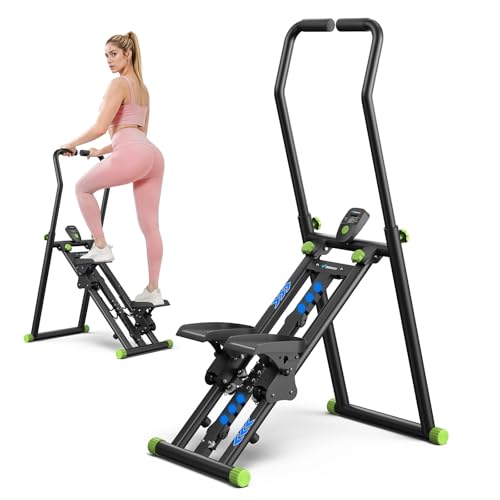
- 9 resistance levels for varied training
- Vertical climbing engages the full body
- Foldable, quiet, and rated to 330 pounds
Best For: Runners wanting compact full-body conditioning at home
Advanced Resistance Pick
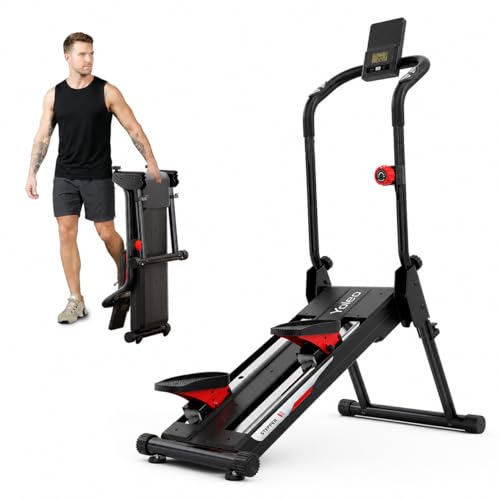
- 16 magnetic resistance levels
- Two incline modes for cardio or strength
- LCD display with heart-rate sensors
Best For: Runners seeking quiet, trackable, progressive cross-training
Simple Stability Pick

- Three resistance levels and pedal inclines
- Adjustable handlebar with non-slip pedals
- Foldable frame rated to 300 pounds
Best For: Runners wanting simple, stable home cross-training
Commercial-Grade Power – 550-LB JELENS Stair Climber
For runners seeking a stair climber for runners that can support demanding training, the JELENS combines a sturdy alloy-steel frame with 15 resistance levels and speeds from 24 to 164 steps per minute. Its broad pedals, safety sensors, and real-time metrics make it suitable for structured cardio and leg-endurance sessions.
Best For: Runners who want a heavy-duty, high-capacity machine for progressive stair intervals and full-body conditioning.
Pros:
- 550-pound maximum user capacity and heavy-duty alloy-steel construction
- 15 speed levels, eight preset programs, and a 24–164 steps-per-minute range
- Infrared motion sensors, pedal auto-locking, and non-slip pedal surfaces
- LED tracking for time, speed, distance, heart rate, and calories
Cons:
- Its 76.8-inch height and commercial-grade build require substantial floor and ceiling clearance
- The heavier, full-size design is less convenient to move or store than a foldable model
The JELENS is the most substantial option in this group for runners who prioritize capacity, safety features, and detailed workout adjustment over portability.
Adaptive Climbing – Sunny Foldable Stair Climber
This Sunny Health & Fitness model is a practical stair climber for runners who need adjustable climbing mechanics without giving up storage convenience. Its step height adjusts from 8.9 to 23.5 inches, while the foldable frame and SunnyFit app support compact home training.
Best For: Runners in apartments or smaller home gyms who want adjustable stride training, guided workouts, and easier storage.
Pros:
- Foldable design helps conserve space between workouts
- Adjustable step height and 21.5-inch stride support varied training demands
- SunnyFit app includes programs, scenic routes, trainer sessions, and AI-personalized plans
- Balance-assist cords can help beginners find footing and cadence
Cons:
- Its 330-pound capacity is lower than the larger commercial-style machines in this roundup
- The cords are intended for light assistance rather than substantial upper-body resistance
With its broad adjustment range and app-based guidance, this is a versatile choice for runners who want to alternate joint-friendlier endurance work with more demanding climbing while keeping equipment footprint manageable.
Quiet Precision Training – ERGOLIFE Commercial Stair Climber
For runners looking for a stair climber for runners that emphasizes smooth, controlled movement, the ERGOLIFE uses floating pedals, a 35-degree angle, and 25 resistance levels. Its quiet drive system and large touchscreen make it well suited to consistent indoor cardio sessions.
Best For: Runners who value low-impact pedal motion, fine resistance control, and quieter home workouts.
Pros:
- Natural floating pedals are designed to reduce pressure on knees and ankles
- 25 resistance levels cover gentle training through high-intensity climbing
- Dual EMS resistance and a Gates drive belt are designed for smoother, quieter operation
- 15.6-inch touchscreen displays workout data and heart rate, with wireless charging and storage trays
Cons:
- At 311 pounds, the machine is difficult to reposition once installed
- The supplied details list conflicting weight-capacity figures, so buyers should verify the current specification
The ERGOLIFE stands out for runners who want a premium-feeling, quiet machine with precise progression options and a pedal design intended for longer, more comfortable sessions.
Compact Conditioning – MERACH Foldable Stair Stepper
The MERACH is a compact stair climber for runners who want supplemental leg and full-body conditioning without dedicating much room to equipment. Adjustable resistance, three adjustable angles, a foldable frame, and a basic LCD monitor make it straightforward for at-home sessions.
Best For: Runners who need an affordable-feeling, space-conscious machine for short conditioning workouts and general fitness.
Pros:
- Foldable, lightweight 26.5-pound design is easy to store and move
- Adjustable resistance and three angles allow workout customization
- Non-slip pedals and secure handlebars support stable climbing
- LCD monitor tracks time, steps, and calories
Cons:
- 300-pound capacity is lower than the larger stair climbers listed here
- The LCD monitor offers fewer tracking details than touchscreen-equipped alternatives
- Its compact form may provide a less substantial feel during very intense training
The MERACH is the most storage-friendly option of the four, making it a sensible pick for runners who want convenient cross-training equipment rather than a commercial-scale stair machine.
Commercial Pick – Signature Fitness Continuous Climber
For runners looking to add low-impact climbing and leg-strength work to their routine, the Signature Fitness Continuous Climber offers a commercial-grade alternative to a treadmill. Its 15 intensity levels, electronic tracking, and 375-pound capacity make it suited to structured home cardio sessions.
Best For: Runners who want a sturdy, high-capacity stair climber for regular lower-body and cardio training.
Pros:
- Provides 15 levels of climbing intensity for progressive workouts.
- Tracks calories, heart rate, mileage, and stepping progress on the electronic display.
- Alloy-steel construction supports up to 375 pounds.
- Includes a water-bottle holder and reading rack.
Cons:
- At 418 pounds, it is difficult to move or reposition.
- Its 54-by-38-inch footprint requires substantial floor space.
This is the most substantial option of the three, with a commercial-quality build and useful workout tracking. It is best for a dedicated home gym rather than a compact apartment setup.
Compact Home Pick – Folding Adjustable Stair Stepper
Runners seeking a space-saving stair climber for home cross-training may prefer this folding stepper. It combines three resistance levels, three height settings, an adjustable handlebar, and a compact design that folds for storage.
Best For: Runners in apartments or smaller spaces who want a quiet, adjustable stair-stepper workout.
Pros:
- Offers three resistance levels and three height settings.
- Extra-wide, textured pedals are designed for a stable footing.
- Folds to save storage space and includes a phone holder.
- Tracks calories, time, and steps.
Cons:
- It has fewer intensity adjustments than the 15-level machines in this roundup.
- The listed capacity is 350 pounds, but the manual reportedly lists a lower capacity.
This is the practical choice when storage and workout noise matter most. Its lighter 27.6-pound frame is easier to handle, though it is less substantial than a commercial-style climber.
Data-Driven Pick – VEVOR 15-Level Continuous Climber
For runners who want measurable stair-climbing intervals, the VEVOR continuous climber provides 15 speed levels ranging from 28 to 168 steps per minute. Its large LED screen, contact heart-rate sensors, and continuous six-step design support focused cardio and lower-body sessions.
Best For: Runners who want a tall, structured stepmill with broad speed control and workout metrics.
Pros:
- Adjusts across 15 speeds from 28 to 168 steps per minute.
- LED display tracks time, calories, speed, and heart rate.
- Textured 17-by-9-inch steps and infrared auto-stop add safety features.
- Transport wheels make the 229.3-pound machine easier to relocate.
Cons:
- At 79 inches tall, it requires a ceiling clearance of about 8.8 to 9.8 feet.
- Its 330-pound capacity is lower than the Signature Fitness model.
- The machine requires a relatively large, dedicated workout area.
The VEVOR is a strong match for runners who prioritize pace control and detailed feedback. Check ceiling height before buying, since its tall continuous-climber format may not suit every home.
Compact Full-Body Pick – MERACH Adjustable Stair Stepper
For runners looking to add low-impact cardio and strength work at home, the MERACH is a practical stair climber for runners who want adjustable resistance without a large machine. Its vertical climbing motion, foldable frame, and quiet operation suit compact home gyms and apartment workouts.
Best For: Runners seeking full-body conditioning, adjustable intensity, and space-saving storage.
Pros:
- Offers 9 resistance levels for warm-ups, calorie-focused sessions, and harder training.
- Uses vertical climbing to engage the legs, glutes, core, upper body, and back.
- Includes large anti-slip pedals, adjustable handlebars, and a 330-pound capacity.
- Foldable, lightweight, and designed for quiet operation.
Cons:
- Its 9-level resistance range is less extensive than some magnetic alternatives.
- The 24-pound frame may feel less substantial than heavier commercial-style equipment.
The MERACH balances versatility and portability well. It is a strong choice when runners want a quiet supplemental workout that challenges more than just the lower body.
Advanced Resistance Pick – YOLEO Magnetic Stair Stepper
The YOLEO is a stair climber for runners who want a wider resistance range and training feedback in a home machine. Its magnetic system, two incline modes, heart-rate sensors, and foldable design support both steady endurance work and harder leg-focused sessions.
Best For: Runners who prioritize quiet operation, precise resistance changes, and cardio tracking.
Pros:
- Provides 16 magnetic resistance levels, up to 130 pounds, for gradual progression.
- Offers 61-degree cardio and 77-degree strength-focused incline modes.
- Heart-rate sensors and an LCD monitor help track workout intensity and progress.
- Folds for storage and includes wheels and a handle for easier movement.
Cons:
- The feature-rich design may be more equipment than runners need for simple supplemental sessions.
- The supplied notes do not list the machine’s dimensions or item weight.
With its magnetic resistance and dual incline settings, the YOLEO is the most adjustable option in this group. It makes sense for runners building structured cross-training sessions around effort and heart-rate awareness.
Simple Stability Pick – YYJO Foldable Stair Stepper
The YYJO offers a straightforward way to add climbing and stepping work to a runner’s routine. As a stair climber for runners, it combines three resistance settings, three pedal inclines, an adjustable handlebar, and a compact foldable frame for basic home conditioning.
Best For: Runners wanting an uncomplicated, budget-conscious-style home stepper with balance support.
Pros:
- Three resistance levels and 0-, 10-, and 20-degree pedal inclines allow workout variation.
- Stepping motion targets the core, glutes, hamstrings, calves, and upper body.
- Adjustable handlebar and non-slip pedals support stability during exercise.
- Foldable construction, 300-pound capacity, and LCD tracking suit home use.
Cons:
- Only three resistance levels provide less fine-tuning than the other listed models.
- The supplied notes do not specify noise performance or a heart-rate sensor.
The YYJO is a practical pick for runners who value simple controls and added balance support over advanced resistance adjustment. Its incline options also make it useful for varying lower-body emphasis.
How We Picked the Best Stair Climber for Runners
We focused on features that matter during running cross-training: smooth and adjustable resistance, a useful step range, secure footing, a stable frame, and controls that are easy to read while exercising. We also considered maximum user weight, folding designs, handlebar support, display functions, and whether each machine is better suited to short interval sessions or longer steady-state workouts.
Because home setups vary, the selection includes compact steppers as well as heavier commercial-style continuous climbers. A Stair Climber for Runners should support consistent training without creating unnecessary setup, storage, or maintenance problems.
Quick Comparison
| Best For | Prioritize | Look For |
|---|---|---|
| Hill-strength training | High resistance and stability | Multiple resistance or speed levels |
| Compact home gyms | Easy storage | Folding frame and transport features |
| Longer cardio sessions | Comfort and consistent motion | Extended step range and secure handles |
| Advanced conditioning | Continuous climbing action | Commercial-grade construction and higher capacity |
Key Buying Factors for a Stair Climber for Runners
Resistance and Training Range
Adjustable resistance lets you use the machine for easy recovery work, sustained aerobic training, or hard hill-style intervals. More levels are useful when multiple people share the machine or when you want room to progress.
Step Range and Motion
A longer step range can feel more natural for runners and may allow greater hip and knee movement. Compact steppers are convenient, but their shorter motion may feel more like repeated, controlled steps than a full stair climb.
Stability, Capacity, and Foot Placement
Look for a sturdy base, nonslip pedals, and a weight capacity comfortably above the user’s body weight. Heavier frames generally provide a more planted feel during vigorous intervals, while handlebars can improve balance and confidence.
Size, Folding, and Display Features
Measure both the operating footprint and storage area before buying. A basic LED display may be enough for time and step tracking, while runners who follow structured sessions may prefer clearer speed, resistance, or calorie information.
Who Should Buy Which Stair Climber for Runners?
Choose a commercial-style or continuous climber if you want a firm, gym-like platform for frequent, demanding workouts and have room for a heavier machine. Choose a foldable model if space is limited or the stair climber will supplement—not replace—your regular runs.
Runners focused on hill repeats should prioritize resistance range and stability. Those seeking low-impact aerobic conditioning may prefer an extended step range and smoother motion. Beginners or occasional users can save space and money with a compact adjustable-resistance stepper, while experienced athletes should look for stronger construction, higher capacity, and controls that make interval changes simple.