The best adjustable plyometric boxes make it easier to scale box jumps, step-ups, split squats, and other explosive exercises without buying several separate platforms. Adjustable designs can also help households with multiple users or changing training goals.
We compared 10 options across height range, construction, traction, portability, weight capacity, and setup requirements to help you choose a box that fits your space and training style.
Best 10 Adjustable Plyometric Boxes Picks for 2026
Best Overall

- Three height settings up to 24 inches
- Welded steel with 400-pound capacity
- Textured rubber top and stackable frame
Best For: Home gym users seeking a durable, adjustable platform
Best Budget Pick
Fuel Pureformance Adjustable Plyometrics Box
- Three settings: 14, 18, and 22 inches
- Steel frame with powder-coated finish
- Non-slip top and non-marking rubber feet
Best For: Budget-conscious jump and agility training
Best Multi-Height Set

- Includes 12-, 18-, and 24-inch platforms
- 500-pound stated weight capacity
- Textured tops and rubber pads add traction
Best For: Shared spaces needing several training heights
Best Soft-Sided Option
Yes4All 3-in-1 Soft-Padded Plyo Box

- Padded EVA foam over a wooden core
- Three-in-one design for varied positioning
- Non-slip PVC surface and 450-pound capacity
Best For: Home workouts favoring cushioning and versatility
Best Steel Value
- Three settings: 12, 16, and 20 inches
- Steel construction with 550-pound capacity
- Fully assembled with non-slip landing surface
Best For: Stable home or gym training with a compact steel box
Best Foam Option
BalanceFrom 3-in-1 Foam Plyo Box

- Rotates for 16-, 20-, and 24-inch heights
- High-density foam softens impact
- Lightweight and easy to reposition
Best For: Beginner-friendly home workouts and portable training
Best Height Range
Valor Fitness Adjustable Plyo Box

- Five settings from 18 to 31 inches
- Steel build supports up to 400 pounds
- Safety locks secure each height
Best For: Progressive athletic training and higher box jumps
Best Compact Wood Option
CAP Barbell 3-in-1 Plyometric Box

- Three height positions from 12 to 16 inches
- Textured non-slip top with smooth edges
- Carry handles and 300-pound recommendation
Best For: Compact home-gym plyometric training
Best Adjustable Steel Option
Steel 3-Level Plyometric Jump Box

- Adjusts to 14, 18, or 22 inches
- Alloy-steel frame with powder-coat finish
- Non-slip platform and non-marking rubber feet
Best For: Higher box jumps and athletic conditioning
Best High-Capacity Wood Option
- Three positions from 12 to 16 inches
- Listed 400-pound maximum capacity
- Textured surface, sanded edges, and side handles
Best For: High-capacity home or gym strength training
Best Overall – REP Adjustable Plyo Box
The REP Adjustable Plyo Box is a strong, space-conscious choice among adjustable plyometric boxes. Its welded-steel frame offers three height settings up to 24 inches, while the textured rubber platform supports confident landings for jumps, step-ups, squats, and other exercises.
Best For: Home gym users who want a durable, adjustable platform with a compact, stackable design.
Pros:
- Three height options with a maximum height of 24 inches
- Welded-steel construction with a stated 400-pound capacity
- Textured rubber top and nesting frame support grip and storage
Cons:
- At 40 pounds, it may be less convenient to move frequently
- Only one box is included
With professional-grade construction, useful height adjustment, and a space-saving frame, this REP model is a well-rounded option for progressive home training.
Best Budget Pick – Fuel Pureformance Adjustable Plyometrics Box
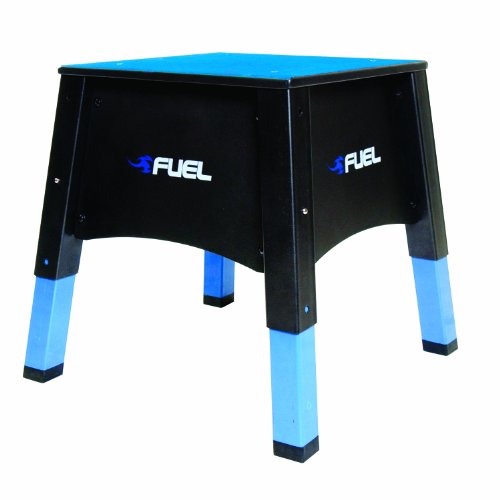
The Fuel Pureformance Adjustable Plyometrics Box delivers three practical height settings at 14, 18, and 22 inches. This adjustable plyometric box uses a steel frame, rubber feet, and a non-slip 16-by-16-inch landing surface for jump, speed, agility, and step-up workouts.
Best For: Budget-conscious athletes who want straightforward height adjustment for cardio, agility, and jump training.
Pros:
- Quick spring-button adjustment across three heights
- Steel construction with a blue and black powder coat
- Rubber feet help protect floors and keep the box in place
Cons:
- Maximum height is 22 inches
- Includes a 30-day manufacturer warranty
- The listed landing surface is 16 by 16 inches
This is a practical, uncomplicated choice when you want adjustable heights and basic stability without adding extra features.
Best Multi-Height Set – VEVOR Plyometric Jump Box Set
The VEVOR Plyometric Jump Box set stands out by including three platforms at 12, 18, and 24 inches. For shoppers comparing adjustable plyometric boxes, this setup offers separate height options, welded steel construction, rubber feet, and textured silicone tops for varied home or gym conditioning workouts.
Best For: Households, training partners, or gyms that need multiple jump heights for different users and exercises.
Pros:
- Includes three platforms in 12-, 18-, and 24-inch sizes
- Stated 500-pound capacity with welded steel construction
- Rubber pads and textured silicone surfaces support traction and stability
- Boxes can be stacked or disassembled for storage
Cons:
- Requires assembly
- Three-piece storage may require more space than a single adjustable frame
Its three-size format is especially flexible for shared training spaces, though buyers should plan for assembly and storage of multiple platforms.
Best Soft-Sided Option – Yes4All 3-in-1 Soft-Padded Plyo Box
The Yes4All 3-in-1 Soft-Padded Plyo Box offers a cushioned alternative to metal adjustable plyometric boxes. Its wooden core is covered with EVA foam and vinyl, and its three-in-one design provides multiple orientations for step-ups, box jumps, HIIT, and strength work.
Best For: Home users who prefer a padded landing surface and versatile positioning for mixed workouts.
Pros:
- Wooden core with EVA foam cushioning and vinyl covering
- Three-in-one design supports multiple height options
- Non-slip PVC surface is waterproof and designed for traction
- Stated weight capacity reaches 450 pounds
Cons:
- Soft-sided construction may feel different from a steel platform
- At 13.2 pounds, it is lighter but may provide a different planted feel during use
- Listed dimensions are 16 by 14 by 12 inches
This box is a sensible fit for users prioritizing cushioning and versatility, especially for home workouts where a softer surface is preferred.
Best Steel Value – JFIT Adjustable Plyo Box
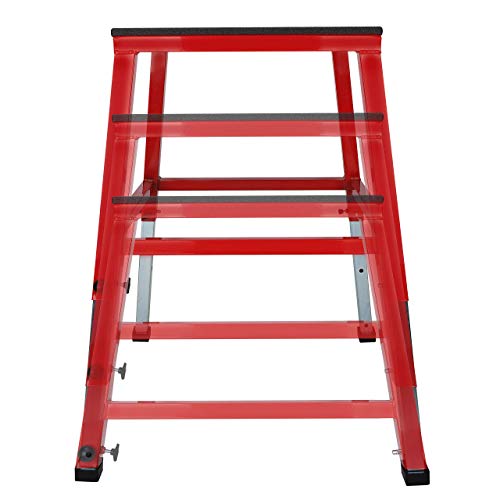
For shoppers comparing adjustable plyometric boxes, the JFIT model offers three height settings—12, 16, and 20 inches—in a compact, fully assembled steel design. Its locking legs, non-slip landing surface, and 550-pound capacity make it suited to controlled jumps, step-ups, and conditioning work.
Best For: Home and gym users who want a sturdy, tool-free adjustable box with a high stated weight capacity.
Pros:
- Adjusts to 12, 16, or 20 inches.
- Heavy-duty welded iron-bar construction supports up to 550 pounds.
- Non-slip vinyl top and rubber corner pads help stabilize landings.
- Arrives fully assembled with no tools required.
Cons:
- Offers only three height levels.
- The 14-by-14-inch top platform is relatively compact.
- Its steel construction may be less convenient to move than foam alternatives.
The JFIT is a practical choice when stability and load capacity matter more than portability or a wide range of height increments. Verify that its compact landing area fits your training style.
Best Foam Option – BalanceFrom 3-in-1 Foam Plyo Box
The BalanceFrom 3-in-1 is a foam alternative for shoppers seeking adjustable plyometric boxes that are easy to reposition. Rotating the box provides 16-, 20-, and 24-inch training heights, while the high-density foam construction offers softer impact for jumps, step-ups, HIIT, and agility drills.
Best For: Beginners, home-gym users, and anyone prioritizing lighter weight and softer landings.
Pros:
- Three height options are available by rotating the box.
- High-density foam helps minimize shin scrapes and soften impact.
- Textured anti-slip surface supports jumps and step-ups.
- Lightweight design is easy to move and store.
Cons:
- Maximum recommended weight is 250 pounds.
- Foam may provide less rigid support than steel construction.
- The supplied details list conflicting weights, so confirm the current product specifications before purchase.
This BalanceFrom model is appealing for general fitness and home use, especially when portability and forgiving landings are priorities. Users needing a higher weight rating may prefer a steel option.
Best Height Range – Valor Fitness Adjustable Plyo Box
The Valor Fitness adjustable plyo box stands out among adjustable plyometric boxes for its five-position range from 18 to 31 inches. Its steel frame, rubber top, and locking system support progressive box jumps, step-ups, agility drills, and strength-focused training.
Best For: Athletes and experienced home-gym users who want higher jump settings and progressive training options.
Pros:
- Five adjustable positions cover 18 to 31 inches.
- Steel construction has a 400-pound capacity.
- Non-slip rubber top supports stable training.
- Popper pins and steel safety locks secure the selected height.
Cons:
- At 50 pounds, it is less portable than the foam option.
- Its 18-inch minimum height may be high for beginners.
- It has a lower stated capacity than the JFIT model.
The Valor is the strongest fit for users who expect to progress toward taller jumps and want five clearly defined height positions. Its heavier steel build favors stability over easy storage or transport.
Best Compact Wood Option – CAP Barbell 3-in-1 Plyometric Box
If you want adjustable plyometric boxes for home workouts without a complicated setup, the CAP Barbell 3-in-1 model offers three heights in one compact wood design. Rotate it to use 12-, 14-, or 16-inch positions for box jumps, step-ups, agility drills, and progressive plyometric training.
Best For: Home-gym users who want a portable wooden box with lower-to-moderate height options.
Pros:
- Three height options: 12, 14, and 16 inches.
- Textured non-slip surface and smooth-finished edges support confident, comfortable use.
- Interlocking construction, countersunk screws, and integrated carry handles improve stability and portability.
- Listed maximum weight recommendation of 300 pounds.
Cons:
- Maximum height is 16 inches, which may be limiting for advanced jump training.
- Engineered-wood construction may not suit shoppers specifically seeking steel.
With its compact footprint, carry handles, and three easy-to-access heights, this CAP Barbell box is a practical choice for general conditioning and beginner-to-intermediate plyometric work.
Best Adjustable Steel Option – Steel 3-Level Plyometric Jump Box
Among adjustable plyometric boxes, this steel model stands out for its spring-button height adjustment and taller range. It switches between 14, 18, and 22 inches, making it suitable for box jumps, speed work, agility drills, HIIT, and lower-body strength training.
Best For: Athletes and home-gym users who prioritize a steel frame and a higher 22-inch training position.
Pros:
- Three adjustable heights: 14, 18, and 22 inches.
- Heavy-duty alloy-steel construction with a protective powder-coat finish.
- Textured 16-by-16-inch platform provides a non-slip landing surface.
- Non-marking rubber feet help protect floors and keep the box positioned during movement.
Cons:
- Its 32-pound weight is heavier than the listed wooden alternatives.
- The 250-pound maximum capacity is lower than some wood boxes in this roundup.
The broader height range and steel construction make this the most training-focused option here, particularly for users who want to progress beyond a basic 12- or 16-inch platform.
Best High-Capacity Wood Option – CAELUM 3-in-1 Wood Plyo Box
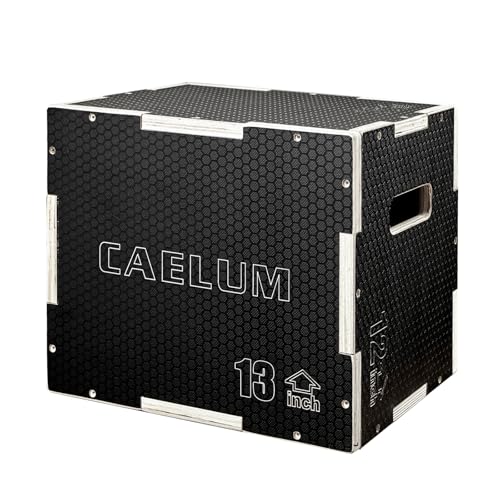
The CAELUM is one of the adjustable plyometric boxes to consider when weight capacity is a priority. Its plywood construction offers three positions at 12, 13, and 16 inches, while the textured top and sanded edges support box jumps, step-ups, squats, push-ups, and dips.
Best For: Users seeking a high-capacity wooden box for varied home or gym strength and conditioning exercises.
Pros:
- Listed maximum weight capacity of 400 pounds.
- Three height options: 12, 13, and 16 inches.
- Honeycomb-textured surface and smooth, sanded edges improve traction and comfort.
- Pre-drilled holes, puzzle joints, included screws, and side handles support assembly and portability.
Cons:
- The supplied caution states that this 12-by-13-by-16-inch model does not have internal support.
- Its 16-inch maximum height may be insufficient for users seeking taller jumps.
- Assembly is required.
Its 400-pound listed capacity and versatile exercise range make the CAELUM appealing for strength-focused training, but shoppers should weigh the stated lack of internal support against their intended use.
How We Picked the Best Adjustable Plyometric Boxes
We focused on the features that matter most during repeated jumping and step-up work: usable height settings, platform stability, surface traction, construction quality, and ease of adjustment. We also considered whether each box is better suited to beginners, experienced athletes, compact home gyms, or shared spaces.
Because product designs vary widely, this list includes steel platforms, wooden boxes, padded foam models, and fixed-height or multi-position options marketed for adjustable use. Always verify the current dimensions, weight rating, and included hardware before ordering.
Quick Comparison
| Feature | What to Look For |
|---|---|
| Height range | Multiple positions that match your current ability and future progression |
| Construction | Steel for a rigid platform; wood or foam for different balance of weight and impact feel |
| Surface | Non-slip covering, textured coating, or padding that remains secure during landings |
| Capacity | A published weight limit with a comfortable margin above the user’s body weight |
| Setup | Assembled or tool-free designs for faster, more convenient use |
Key Buying Factors for Adjustable Plyometric Boxes
Height Adjustment
Choose a box with a low setting you can use confidently and a higher setting that supports progression. New athletes should prioritize manageable step-ups before attempting maximal jumps. Confirm the actual height levels rather than relying only on the product name.
Stability and Weight Capacity
A box should stay planted and resist tipping when you land near the edge. Look for a wide base, strong frame, non-slip feet, and a clearly stated load rating. If you plan to use it for weighted step-ups or heavy strength movements, leave extra capacity beyond your combined body weight and equipment.
Surface Grip and Landing Comfort
A grippy top can reduce unwanted foot movement, especially on hard floors. Padded foam may feel more forgiving if your shins contact the box, while steel and wood typically provide a firmer, more predictable surface. A mat underneath can improve traction and protect flooring.
Storage and Adjustment Method
Measure both the footprint and the tallest configuration. Some Adjustable Plyometric Boxes require repositioning panels or pins, while others offer quick height changes. Select a design you will actually adjust regularly instead of leaving at one height.
Who Should Buy Which Adjustable Plyometric Boxes?
Beginners and general home-gym users: Choose a stable model with a low setting, secure traction, and forgiving construction. A padded or foam option can be useful while learning landing mechanics.
Progressive strength and conditioning athletes: Prioritize a broad height range, rigid construction, high weight capacity, and a platform that remains stable during repeated explosive work.
Shared households or compact spaces: Look for several practical height settings, easy adjustment, and a manageable footprint. A versatile three-in-one design can replace multiple fixed boxes.
High-intensity training environments: Favor durable steel or reinforced wood construction, dependable anti-slip features, and a generous capacity rating. Inspect fasteners, feet, and the landing surface regularly.