The best foam plyometric boxes make jump training more approachable while giving home-gym athletes a versatile platform for step-ups, elevated exercises, and conditioning drills. Soft outer padding can also reduce the sting of missed jumps compared with exposed wooden or metal boxes.
This roundup compares 10 popular options by height versatility, padding, stability, surface traction, construction, and everyday home-gym usability.
Best 10 Foam Plyometric Boxes Picks for 2026
Best Budget Foam Plyo Box

- Three heights: 16, 20, and 24 inches
- Soft high-density foam with a non-slip surface
- Lightweight 10-pound portable design
Best For: Beginners and compact home gyms
Best Reinforced Foam Plyo Box

- Wooden core with EVA foam and vinyl padding
- Three heights from 12 to 16 inches
- Listed capacity up to 440 pounds
Best For: Stable, lower-height home training
Best Tall Foam Plyo Box

- Adjusts to 20, 24, or 30 inches
- High-density foam with an anti-slip surface
- 16-pound portable construction
Best For: Progressive training and taller box jumps
Best Soft-Padded Foam Plyo Box
- Wooden core with cushioned synthetic covering
- Three height settings from 12 to 16 inches
- Listed capacity up to 440 pounds
Best For: Cushioned step-ups and compact home workouts
Best Adjustable Wood Option
CAP Barbell 3-in-1 Plyometric Box

- Three heights: 16, 14, and 12 inches
- Non-slip surface with carry handles
- 300-pound maximum weight recommendation
Best For: Home gyms needing a stable, adjustable wood platform
Best All-Around Soft Box

- Three heights: 16, 20, and 24 inches
- Dense foam core with textured PVC cover
- Ships assembled with 400-pound capacity
Best For: Beginners and home gyms wanting a forgiving, versatile box
Best for Higher Jumps
CAP Barbell 3-in-1 Foam Plyometric Box
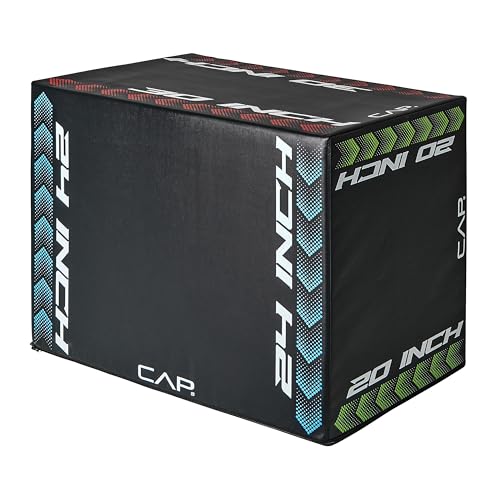
- Three heights: 20, 24, and 28 inches
- High-density foam with durable PVC cover
- Weighted core supports stability during jumps
Best For: Experienced users training at higher box-jump heights
Best Adjustable Home Pick
NEWBULIG 3-in-1 Plyometric Jump Box

- Three rotating height settings
- Cushioned foam landing surface
- Lightweight, no-assembly design
Best For: Home users prioritizing adjustability and portability
Best Lightweight High-Capacity Pick
Goplus 3-in-1 Soft Foam Plyo Box

- Three heights: 16, 20, and 24 inches
- Cushioning EPE foam core
- 352-pound capacity at 7 pounds
Best For: Portable, easy-clean home and studio workouts
Best Height-Range Variety
Goplus 3-in-1 Foam Plyometric Jump Box

- Configurations reach heights up to 30 inches
- High-density foam with firm support
- 440-pound capacity and no assembly
Best For: Progressive training across multiple height ranges
Best Budget Foam Plyo Box – Compact 3-in-1 Trainer
If you want foam plyometric boxes for home workouts without committing to a large, heavy platform, this BalanceFrom model offers three height settings in one compact design. Rotate it to use 16-, 20-, or 24-inch heights for box jumps, step-ups, HIIT, and agility drills.
Best For: Beginners, home-gym users, and anyone seeking a lightweight, softer-impact plyo box with multiple height options.
Pros:
- Three height options support varied training and progression.
- High-density foam provides softer impact and may help minimize shin scrapes.
- Textured, non-slip surface supports jumps, landings, and step-ups.
- Lightweight 10-pound design is easy to move and store.
Cons:
- The listed maximum weight recommendation is 250 pounds, so heavier users should check fit carefully.
- Its compact dimensions may provide less landing room than larger boxes.
This is a practical, portable choice when comfort and adjustability matter more than a rigid, heavy-duty construction. The two-year warranty is an added benefit for home users.
Best Reinforced Foam Plyo Box – High-Capacity Soft-Padded Box
Among foam plyometric boxes, this Yes4All model stands out for its wooden core, cushioned EVA foam, and vinyl covering. Its three-sided design provides 12-, 14-, and 16-inch height options while combining soft padding with a stated capacity of up to 440 pounds.
Best For: Users who want a softer landing surface with a reinforced core and a high stated weight capacity for step-ups, box jumps, and HIIT.
Pros:
- Wooden core adds structure and stability beneath the foam and vinyl layers.
- Three height options accommodate different exercises and training levels.
- PVC surface offers traction and water resistance.
- Listed weight capacity reaches 440 pounds.
Cons:
- At 13.2 pounds, it is heavier than lightweight all-foam alternatives.
- The listed dimensions are relatively compact, with a maximum height of 16 inches.
- The warranty is one year, with a 30-day return period.
This box is a strong fit for buyers prioritizing support and load capacity over maximum height. Its padded exterior can also make early jump training feel less intimidating.
Best Tall Foam Plyo Box – 30-Inch 3-in-1 Jump Box
This BalanceFrom option is one of the taller foam plyometric boxes in the group, rotating between 20-, 24-, and 30-inch heights. The high-density foam construction, textured surface, and 16-pound weight make it suited to progressive home or gym workouts.
Best For: Experienced users who want a 30-inch maximum height for plyometrics, HIIT, step-ups, and agility training.
Pros:
- Three height settings provide a broad progression range.
- High-density foam offers softer impact than a bare rigid box.
- Textured anti-slip surface supports controlled landings and step-ups.
- Portable 16-pound build is easier to reposition than heavier boxes.
Cons:
- The supplied specifications list a 60-pound maximum weight recommendation, which limits suitability for some users.
- The tallest 30-inch setting may be too challenging for beginners.
- It is larger and heavier than the smaller BalanceFrom model.
The wide height range makes this model appealing for users progressing toward higher jumps. However, the unusually low listed weight recommendation should be checked carefully before purchase and use.
Best Soft-Padded Foam Plyo Box – Upgraded Compact Version
This upgraded Yes4All model combines a wooden core with EVA foam and a synthetic outer covering, giving these foam plyometric boxes a cushioned training surface with added internal structure. Its 16-, 14-, and 12-inch positions suit step-ups, box jumps, HIIT, and general strength work.
Best For: Home users who want a compact, cushioned box with a reinforced core and a high stated capacity.
Pros:
- Wooden core is covered with cushioning for a more forgiving contact surface.
- Three height settings support varied exercises and gradual progression.
- The non-slip PVC-style surface is designed for traction and water resistance.
- Listed weight capacity is up to 440 pounds.
Cons:
- The 16-inch maximum height is lower than taller plyo boxes.
- Its 16-by-14-by-12-inch footprint may feel small for some jumping styles.
- The supplied notes do not specify the product weight.
Choose this version if a padded, stable platform is more important than reaching advanced jump heights. Its compact shape also makes it a sensible option for limited home-gym space.
Best Adjustable Wood Option – CAP Barbell 3-in-1 Plyometric Box
If you want foam plyometric boxes but prefer a rigid training platform, this CAP Barbell model offers three heights in one engineered-wood design. Rotate it between 16, 14, and 12 inches for box jumps, step-ups, agility drills, and progressive training.
Best For: Home-gym users who want adjustable heights, a textured non-slip surface, and a compact wood box for general conditioning.
Pros:
- Three height options support varied jump and step-up progressions.
- Interlocking panels and countersunk screws are designed for stability.
- Textured surface, smooth edges, and integrated carry handles add practical usability.
- Rated for users up to 300 pounds.
Cons:
- Engineered wood provides less forgiving contact than a foam box.
- The listed size range tops out at 16 inches.
This is a straightforward choice for shoppers prioritizing firm support, multiple low-to-moderate heights, and easy repositioning over the softer landing feel associated with foam plyometric boxes.
Best All-Around Soft Box – REP Soft Plyo Box
The REP Soft Plyo Box is a strong match for shoppers specifically seeking foam plyometric boxes with adjustable heights. Its dense foam core and textured PVC cover provide a more forgiving platform for jumps, step-ups, squats, and other functional-fitness movements.
Best For: Beginners, home-gym users, and athletes who want a fully assembled soft box with 16-, 20-, and 24-inch height options.
Pros:
- Three heights accommodate progression from step-ups to higher jumps.
- Dense foam core offers a softer landing surface than rigid boxes.
- Textured vinyl cover is designed to improve grip and durability.
- Ships fully assembled and has a stated 400-pound weight capacity.
Cons:
- It is a medium 24/20/16-inch model, so it may not suit users seeking very low or very high settings.
- The PVC-covered foam design may be bulkier to store than a compact rigid box.
With three useful heights, no assembly, and a padded construction, this is the most versatile pick here for buyers who want a ready-to-use foam plyometric box for mixed home workouts.
Best for Higher Jumps – CAP Barbell 3-in-1 Foam Plyometric Box
Among these foam plyometric boxes, this CAP Barbell model is aimed at users who want higher training settings. Rotating the box provides 20-, 24-, and 28-inch heights, while the high-density foam construction and weighted core support dynamic jump and conditioning work.
Best For: More experienced athletes and home-gym users who want a soft-sided box with higher jump heights and a weighted design for added stability.
Pros:
- Three height options reach up to 28 inches.
- High-density foam provides a more forgiving surface for missed jumps.
- Weighted core is designed to reduce tipping and unwanted movement.
- PVC cover is durable and easy to maintain.
Cons:
- The lowest listed height is 20 inches, which may be too high for beginners.
- Its stated maximum weight recommendation is 250 pounds, lower than the REP model.
This box makes the most sense when higher jump training is a priority. Its foam-and-weighted-core construction balances softer contact with a design intended for explosive workouts, though its height range is less beginner-friendly.
Best Adjustable Home Pick – NEWBULIG 3-in-1 Plyometric Jump Box
The NEWBULIG 3-in-1 is a practical choice among foam plyometric boxes for home workouts. Rotate the box to select one of three heights, while its cushioned foam construction and textured Oxford cloth cover support jumps, step-ups, HIIT, and conditioning drills.
Best For: Home users who want adjustable heights, cushioned landings, and a lightweight box that needs no assembly.
Pros:
- Three height options from one rotating design.
- Foam and pearl cotton cushioning help soften landings.
- Raised woven cover texture improves grip during jumps and step-ups.
- Lightweight and portable, with no assembly required.
Cons:
- The supplied details do not list a maximum weight capacity.
- The cover material may be less convenient to clean than the PU surfaces on some competing boxes.
Choose the available size carefully: the listed options are 24 x 16 x 20 inches and 30 x 20 x 24 inches. Either version offers flexible home training, but this model is especially appealing if portability and landing comfort matter most.
Best Lightweight High-Capacity Pick – Goplus 3-in-1 Soft Foam Plyo Box
The Goplus 3-in-1 is one of the more versatile foam plyometric boxes for mixed home or studio training. Flipping the 16-by-20-by-24-inch box provides three action heights, while its dense EPE foam, tear-resistant PU cover, and stated 352-pound capacity support varied workouts.
Best For: Users seeking a lightweight, easy-clean box for jumps, HIIT, step-ups, split squats, and dips.
Pros:
- Offers 16-, 20-, and 24-inch height settings.
- Dense EPE foam cushions landings and is designed to resist deformation.
- Water- and sweat-resistant PU cover wipes clean quickly.
- Weighs 7 pounds while supporting up to 352 pounds.
Cons:
- Only one height range is listed for this model.
- The 90-day warranty is limited to manufacturer defects.
This is a strong all-around option when you want a compact box that is easy to move and maintain. Its specified weight capacity also makes it a practical choice for more demanding home or professional studio sessions.
Best Height-Range Variety – Goplus 3-in-1 Foam Plyometric Jump Box
The Goplus GO-10167 offers useful flexibility for shoppers comparing foam plyometric boxes across different training levels. Depending on the selected version, its flip design provides 12/14/16, 16/20/24, or 20/24/30-inch height combinations, with high-density EPE foam and an anti-slip PU cover.
Best For: Users who want multiple height-range configurations for beginner-friendly drills through more challenging jumps.
Pros:
- Available configurations include heights up to 30 inches.
- High-density EPE foam combines softer landings with firm support.
- Anti-slip, waterproof PU cover is easy to wipe clean.
- Arrives fully assembled and supports up to 440 pounds.
Cons:
- The height combination depends on the selected size, so buyers should verify the configuration before ordering.
- Its smallest listed dimensions may provide less landing area than larger boxes.
Among these options, this Goplus model stands out for its broadest stated height selection and highest listed weight capacity. Confirm the chosen size and height set to match your available space and training goals.
How We Picked the Best Foam Plyometric Boxes
We focused on boxes designed for repeated home-gym use, prioritizing practical features rather than flashy specifications. The most important criteria were three-in-one height configurations, dense foam or padded construction, non-slip surfaces, durable covers, and a footprint suitable for common training spaces.
We also considered how easily each box supports different movements. A useful plyo box should work for box jumps, step-ups, incline push-ups, Bulgarian split squats, and other elevated exercises—not just maximum-height jumps. Because product dimensions, weight limits, and materials can vary by size, always confirm the specifications for the exact version you choose.
Quick Comparison
Most options in this roundup use a 3-in-1 design, allowing you to rotate the box for three different working heights. That versatility is valuable for households with multiple users or athletes progressing from low step-ups to higher jumps. REP, CAP Barbell, BalanceFrom, Yes4All, NEWBULIG, and Goplus models differ mainly in their available sizes, foam density, cover design, and overall stability.
For beginners, a lower and wider orientation is typically the easiest starting point. More experienced users may prefer a taller configuration, provided the box remains stable and there is enough clearance around it. A soft box is not automatically stable, so the floor surface and box footprint still matter.
Key Buying Factors for Foam Plyometric Boxes
Height Options and Dimensions
Check the actual height measurements rather than relying only on “3-in-1” wording. Common configurations are around 16, 20, and 24 inches, but dimensions vary. Choose a height that lets you train safely with controlled landings and room to progress.
Foam Density and Core Construction
Dense foam provides cushioning while resisting excessive compression during landings. Some soft plyo boxes use a wooden core beneath the padding, which can improve rigidity but may feel firmer. Look for construction details that match your intended intensity and body weight.
Grip and Cover Durability
A non-slip cover helps prevent the box from shifting and gives your shoes a more dependable landing surface. PU or vinyl-style covers are generally easy to wipe clean, while reinforced stitching and abrasion-resistant surfaces can improve longevity.
Stability and Available Space
Measure the training area before buying. A wider base is usually more forgiving, but it also needs more floor space. Use the box on a level, dry, non-slip surface and inspect it regularly for damage, loose seams, or excessive compression.
Who Should Buy Which Foam Plyometric Boxes?
Choose a compact, lower-height option if you are new to plyometrics, primarily need step-ups, or have limited room. A three-height box is the best all-around choice for most home gyms because it supports gradual progression and multiple exercises.
Buy a more rigid padded model if stability is your top concern or several people will share the equipment. Prioritize a dense, generously padded design if missed jumps are a realistic possibility. For frequent HIIT sessions, an easy-clean non-slip cover and durable seams may matter more than the lightest weight.
Whichever of these Foam Plyometric Boxes you choose, begin with the lowest practical height, keep landings controlled, and increase difficulty only when your technique remains consistent.