The best non-slip yoga mats help you stay steady through transitions, balance poses, strength work, and floor exercises without constantly adjusting your setup.
We compared 10 popular options across grip, thickness, comfort, portability, moisture handling, and overall versatility so you can choose a mat that fits your practice and space.
Best 10 Non Slip Yoga Mats Picks for 2026
Best Cushioning
Amazon Basics Extra Thick Exercise Yoga Mat

- 1/2-inch NBR foam cushions joints and absorbs shock
- Textured surface adds traction for yoga and exercise
- Includes an elastic carrying strap
Best For: Home workouts needing extra padding
Best Alignment Support
Natural Rubber Yoga Mat with Alignment Lines

- PU top and rubber backing provide dual-sided grip
- Alignment lines help with posture and positioning
- Extra-large 74.8-by-26.8-inch design
Best For: Alignment-focused yoga and spacious home practice
Best Printed Design
Gaiam Premium 6mm Print Yoga Mat

- 6mm thickness cushions joints during exercise
- Sticky textured surface supports traction
- Includes downloadable yoga workout content
Best For: Beginners and casual yoga practice
Best Value Features
Gruper Eco Friendly Non Slip Yoga Mat

- Textured grip on both sides helps limit slipping
- Double-layer TPE construction resists tearing and deformation
- Includes a strap and storage bag
Best For: Portable yoga, Pilates, and fitness routines
Best for Hot Yoga

- Moisture-wicking surface supports grip during sweaty sessions
- Lightweight and suitable for multiple floor workouts
- Moderate cushioning for wrists, knees, and spine
Best For: Hot yoga, Vinyasa, Bikram, and portable everyday workouts
Best for Plush Cushioning
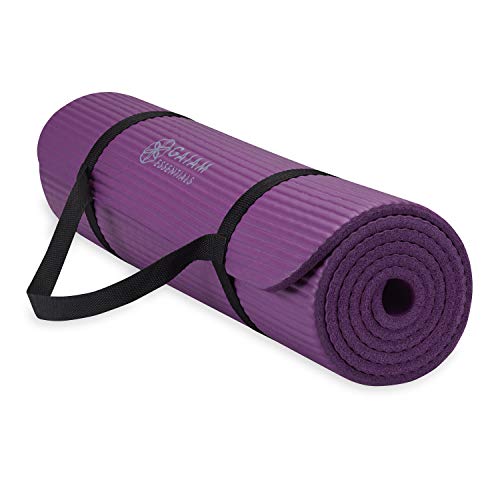
- 10mm NBR foam cushions joints on hard floors
- Textured surface helps reduce slipping during dry workouts
- Includes an adjustable carrying strap
Best For: Beginners, Pilates, stretching, recovery, and low-impact routines
Best Eco-Conscious Grip

- Moisture-absorbing PU surface supports stability
- 5mm thickness balances cushioning and portability
- PVC-free design with easy wipe-down care
Best For: Yoga, Pilates, home workouts, and shoppers seeking PVC-free materials
Best Alignment Pick

- Textured surface supports steady footing
- Laser-etched lines guide alignment
- Includes a shoulder carry harness
Best For: Beginners and portable home workouts
Best Heavy-Duty Pick

- Sticky texture supports traction
- 5mm cushioning protects joints
- Includes a cinch strap and printed design
Best For: Everyday yoga, Pilates, and floor workouts
Best Extra-Cushioned Pick

- 10mm NBR foam adds joint cushioning
- Dual-sided ridges support stability
- Includes a carrying strap
Best For: Comfort-focused yoga, Pilates, and floor workouts
Best Cushioning – Amazon Basics Extra Thick Exercise Yoga Mat
If comfort and shock absorption are priorities, this extra-thick Amazon Basics mat is a practical option among non slip yoga mats. Its 1/2-inch NBR foam construction provides substantial padding for yoga, gym workouts, and everyday floor exercises, while the textured surface adds traction.
Best For: Home exercisers who want generous cushioning and a simple, easy-to-carry mat.
Pros:
- Extra-thick 1/2-inch foam offers padded support and shock absorption.
- Textured surface provides extra traction.
- Elastic carrying strap makes rolled-up storage and transport convenient.
- Wipes clean easily.
Cons:
- At 24 inches wide, it offers less space than some extra-wide mats.
- Its thick cushioning may provide less firm ground feedback for balance-focused work.
This is a straightforward pick for users who value softness over advanced features. The durable NBR foam, traction-focused texture, and included strap make it especially suitable for casual routines and floor exercises.
Best Alignment Support – Natural Rubber Yoga Mat with Alignment Lines
This natural rubber and PU mat combines strong grip with visual alignment guidance, making it a feature-rich choice among non slip yoga mats. The PU top is designed to help keep hands and feet stable when sweaty, while the rubber backing grips wood, tile, and concrete floors.
Best For: Yogis who want a spacious mat with alignment lines, dual-sided grip, and a firm 5mm feel.
Pros:
- PU top supports traction and moisture wicking during sweaty sessions.
- Natural rubber backing helps prevent shifting on several floor types.
- Alignment lines assist with posture and positioning.
- Extra-large 74.8-by-26.8-inch size provides room to move.
Cons:
- At 3.3 kg, it is relatively heavy to carry.
- Its 5mm thickness offers less cushioning than extra-thick mats.
- Requires hand washing according to the care instructions.
Choose this mat when grip, stability, and alignment feedback matter more than minimum carry weight. The included strap and storage bag improve portability, while the generous dimensions suit yoga, Pilates, stretching, and home workouts.
Best Printed Design – Gaiam Premium 6mm Print Yoga Mat
The Gaiam Premium Print Mat offers a balance of cushioning, traction, and visual appeal for everyday practice. Its 6mm PVC construction is designed to support joints, while the textured sticky surface helps provide grip for yoga, Pilates, and floor workouts.
Best For: Beginners and casual practitioners who want a cushioned printed mat with a non-slip texture.
Pros:
- 6mm thickness provides additional cushioning for joints.
- Textured sticky surface delivers traction and grip.
- PVC is 7P-free and listed as non-toxic.
- Includes access to downloadable yoga content.
Cons:
- The 68-by-24-inch size is shorter than some larger mats.
- May have a strong but harmless odor when first unwrapped.
- Needs to air out for 2–3 days before use for best results.
This is a practical entry-level choice if you want reliable cushioning and a motivating printed design. Plan for the recommended airing period, then use it for regular yoga, Pilates, or general floor work.
Best Value Features – Gruper Eco Friendly Non Slip Yoga Mat
The Gruper mat is a versatile option among non slip yoga mats, combining a double-layer design with textured surfaces on both sides. Its TPE material is intended to be softer and safer than traditional non-green PVC and EVA mats, and it includes both a carrying strap and storage bag.
Best For: Yoga and fitness users seeking two-sided grip, everyday durability, and convenient transport accessories.
Pros:
- Textured non-slip surfaces on both sides help improve grip.
- Double-layer construction is designed to resist tearing and deformation.
- Available in 6mm and 8mm thickness options.
- Includes a carrying strap and storage bag.
Cons:
- The supplied listing describes the displayed version as 6mm, so shoppers should verify the desired thickness.
- Not designed for use with shoes or pets’ paws, which may tear the mat.
- Requires hand cleaning and flat drying rather than machine washing or drying.
This mat suits shoppers who want useful accessories and grip on both sides without choosing a specialized alignment model. Follow the care guidance and use it barefoot for yoga, Pilates, and fitness routines.
Best for Hot Yoga – Gaiam Dry-Grip Yoga Mat
For sweaty practices, the Gaiam Dry-Grip is one of the more purpose-built non slip yoga mats in this roundup. Its moisture-wicking topcoat is designed to maintain traction during hot yoga, Vinyasa, Bikram, and other high-intensity workouts, while its 0.2-inch thickness adds everyday cushioning without making the mat especially bulky.
Best For: Hot yoga, sweaty sessions, and users who want a lightweight mat for studio, gym, home, or travel workouts.
Pros:
- Moisture-wicking surface helps maintain grip during sweaty workouts.
- Suitable for yoga, Pilates, stretching, meditation, and floor exercises.
- Lightweight design is easy to roll up and carry.
- Provides cushioning for wrists, knees, elbows, and spine.
Cons:
- At 0.2 inches thick, it offers less plush cushioning than an extra-thick foam mat.
- Hand-wash care may require more effort than a simple wipe-down routine.
If traction in high-sweat conditions is your priority, the Dry-Grip surface makes this a focused choice. It is a practical balance of portability, grip, and moderate cushioning for varied fitness routines.
Best for Plush Cushioning – Gaiam Thick Yoga Mat
The Gaiam Thick Yoga Mat is a comfort-first option among non slip yoga mats, using 10mm high-density NBR foam to soften hard floors. Its textured surface helps reduce slipping during dry workouts, while the included carrying strap makes it convenient for home storage and transport.
Best For: Beginners, Pilates, stretching, physical therapy, and low-impact floor workouts where joint cushioning matters most.
Pros:
- Extra-thick 10mm foam cushions knees, hips, and other joints.
- Textured surface helps reduce slipping on most hard floors during dry workouts.
- Works well for yoga, Pilates, recovery, core exercises, and home fitness.
- Includes an adjustable carrying strap for transport and storage.
Cons:
- Its softer foam feel prioritizes cushioning over a firm, highly stable surface.
- An initial foam odor may be present and can require 24–48 hours of airing out.
- It is intended primarily for dry workouts rather than sweaty hot-yoga sessions.
Choose this model if plush support is more important than a firm performance feel. The substantial foam cushioning is particularly useful on wood, tile, or concrete floors during slower, floor-based routines.
Best Eco-Conscious Grip – Retrospec Laguna 5mm Yoga Mat
The Retrospec Laguna combines a moisture-absorbing PU top with a grippy bottom, making it a strong contender for non slip yoga mats used during demanding sessions. Its 5mm thickness provides a middle ground between cushioning and portability, while the PVC-free construction may appeal to shoppers seeking an eco-conscious material choice.
Best For: Yoga, Pilates, home workouts, and users who want moisture management, moderate cushioning, and PVC-free construction.
Pros:
- PU surface channels away moisture and sweat to support stability.
- 5mm thickness cushions knees and wrists without being extremely thick.
- PVC-free and made with eco-conscious materials.
- Moisture-resistant surface is easy to clean with gentle soap and water.
Cons:
- At 7 pounds, it is heavier than the lightweight Gaiam options in this roundup.
- Care requires washing and hanging the mat to dry.
- The supplied notes do not mention an included carrying strap.
This mat suits shoppers who want a grippy, moisture-absorbing surface without choosing PVC. Its 5mm profile offers a balanced feel for everyday yoga and floor workouts, though the heavier weight is worth considering for frequent travel.
Best Alignment Pick – YOGATI Non Slip Yoga Mat
The YOGATI is a practical choice among non slip yoga mats if you want steady footing, moderate cushioning, and built-in alignment help. Its textured closed-cell surface is designed to hold hands and feet in place during yoga, Pilates, and fitness movements.
Best For: Beginners and home users who want alignment markings, a carry strap, and a lightweight mat for yoga or general workouts.
Pros:
- Textured surface helps maintain grip during sweaty flows and strength poses.
- Alignment lines can help guide hand and foot placement.
- Lightweight design rolls up with the included shoulder harness.
- Reversible two-tone TPE construction wipes clean with mild soap and water.
Cons:
- At 0.24 inches thick, it offers less cushioning than extra-thick workout mats.
- The 24-inch width may feel narrow for users wanting more lateral space.
Choose this model if posture guidance and portability matter as much as grip. It is especially useful for home practice, studio trips, and users learning consistent alignment.
Best Heavy-Duty Pick – Gaiam 5mm Non Slip Yoga Mat
The Gaiam 5mm mat combines a sticky textured surface with moderate cushioning, making it a versatile option among non slip yoga mats. Its 68-by-24-inch format suits yoga, Pilates, stretching, and floor workouts without being especially heavy.
Best For: Yogis and fitness users who want a colorful printed mat with balanced cushioning for everyday practice.
Pros:
- Sticky, textured surface provides traction for holding poses.
- 5mm cushioning helps support joints during floor exercises.
- Printed designs add visual variety to a home workout space.
- Includes an easy-cinch strap for rolling and carrying.
Cons:
- The PVC mat may have a harmless odor and should air out for 2–3 days before use.
- At 68 inches long, it is shorter than some full-length alternatives.
This is a well-rounded everyday pick when you want grip, cushioning, and a decorative design in one mat. Allow time for airing before your first session.
Best Extra-Cushioned Pick – KEEP 10mm Non Slip Yoga Mat
The KEEP mat stands out among non slip yoga mats for its thick 10mm NBR foam and stable dual-sided ridges. It is built for users who prioritize joint cushioning and want a little extra room for stretching, Pilates, meditation, or bodyweight training.
Best For: Beginners, users seeking extra joint support, and home exercisers who prefer a cushioned mat with a carry strap.
Pros:
- 10mm NBR foam provides substantial cushioning and shock absorption.
- Dual-sided ridges support grip against the floor and under hands.
- High-density material is sweat resistant and easy to wipe clean.
- Rolls up with an included carrying strap.
Cons:
- The extra-thick foam may feel less firm for balance-focused standing poses.
- Its 24-inch width is not as broad as the product title’s larger-size wording suggests.
Pick this mat when comfort and floor protection are the priorities. Its thick NBR construction is particularly suited to floor-based routines and users who find standard mats too firm.
How We Picked the Best Non Slip Yoga Mats
We focused on the features that most affect stability and everyday usability: surface traction, cushioning, mat dimensions, moisture resistance, portability, and construction. The selection includes standard 5mm and 6mm mats for balanced support, thicker options for extra comfort, and specialized designs intended for sweaty or hot-yoga sessions.
We also considered practical details such as carrying straps, alignment markings, textured surfaces, and whether a mat is suitable for yoga, Pilates, stretching, fitness training, or general floor work. Since preferences vary, the list includes both grippy natural-rubber-style options and softer, thicker foam designs.
Quick Comparison
- Best all-around thickness: Choose a 5mm to 6mm mat for a balance of cushioning, stability, and portability.
- Best for extra cushioning: Look for 10mm or other thick NBR mats if you exercise on hard floors or need more joint support.
- Best for hot yoga: A moisture-resistant or dry-grip surface can provide more dependable traction as perspiration increases.
- Best for alignment: Printed guide lines can help with hand and foot placement during practice.
- Best for portability: A carrying strap or cinch system makes regular transport easier.
Key Buying Factors for Non-Slip Yoga Mats
Grip and Moisture Control
Grip is more than a marketing label. A lightly textured surface may work well for gentle or dry practices, while hot yoga and high-sweat workouts benefit from materials designed to maintain traction when damp. If you sweat heavily, check care instructions and consider using a yoga towel for added control.
Thickness and Stability
Thicker mats offer more cushioning for knees, wrists, hips, and backs, but very soft mats can feel less stable during balancing poses. A 5mm or 6mm model is usually the most versatile choice. Extra-thick foam is better suited to comfort-focused workouts, stretching, Pilates, or hard surfaces.
Size, Weight, and Storage
Check the mat’s length and width if you are tall, broad-shouldered, or practicing poses that require more room. Larger mats provide extra movement space but may weigh more and be harder to store. Straps and cinch carriers are useful if you commute to classes or keep the mat in a small closet.
Materials and Maintenance
Natural rubber can provide strong traction but may have a noticeable odor initially and may not suit people with latex sensitivities. Foam mats are often lightweight and comfortable. Clean the surface according to the manufacturer’s instructions, allow it to dry fully, and avoid leaving it in prolonged direct sunlight.
Who Should Buy Which Non Slip Yoga Mats?
Choose a balanced 5mm or 6mm mat if you want one option for yoga, Pilates, stretching, and home workouts. Choose a thicker NBR mat if cushioning is your top priority or your floors are especially hard. Choose a dry-grip design for hot yoga or intense sessions where sweat can reduce traction. Choose alignment lines if you are building technique or appreciate visual positioning cues. Finally, choose a mat with a strap if portability and simple storage matter as much as performance.