Building stronger quads and hamstrings at home is easier when your equipment supports controlled, isolated training. The best leg extension machines for home gyms combine adjustable positioning, smooth movement, and enough stability for progressive loading without overwhelming your workout space.
We compared 10 plate-loaded and multipurpose machines designed for seated extensions, lying curls, and other lower-body movements. Use the guide below to match machine type, capacity, footprint, and adjustability to your training goals.
Best 10 Leg Extension Machines for Home Gyms Picks for 2026
Most Adjustable
GMWD LE02 Leg Extension and Curl Machine

- Leg extension, curl, and glute bridge modes
- 28+5 leg positions plus adjustable seat and backrest
- Removable pins add mode switching and travel limitation
Best For: Customizable lower-body workouts
Best Cushioned
Z ZHICHI 2-in-1 Leg Curl/Extension Machine

- Seated extension and lying curl functions
- Three backrest positions and two seat angles
- Full-leather wrap and high-density foam padding
Best For: Comfort-focused home leg training
Best Multi-Exercise
FEIERDUN 4-in-1 Leg Extension Curl Machine

- Adds hip thrust and calf raise functions to extension and curl
- 700-pound listed capacity with commercial-grade steel
- Fits 1-inch or 2-inch plates and includes plate storage
Best For: Versatile, higher-capacity lower-body training
Best Quiet Option
Plate-Free Seated Leg Extension Machine

- Integrated 35- and 70-pound resistance settings
- Claimed operating noise under 15dB
- Compact design with supportive seat and foam rollers
Best For: Quiet beginner-friendly quadriceps workouts
Most Versatile
GMWD LE03 Leg Extension and Curl Machine
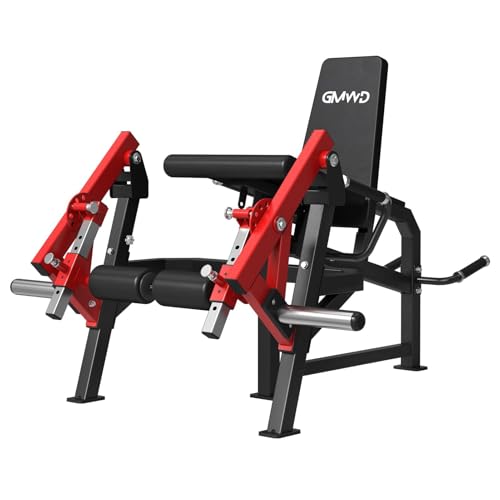
- Combines extensions and multiple curl positions
- Supports unilateral leg training
- Compact steel frame with extensive adjustability
Best For: Home users seeking varied quad and hamstring workouts
Best for Stability
JELENS J10 Leg Extension and Curl Machine

- Combines seated extensions and lying curls
- Reinforced H-shaped base supports stability
- Compact footprint with adjustable backrest
Best For: Home lifters wanting a stable, ergonomic setup
Best for Heavy Training
GMWD LE08 2.0 Leg Extension and Curl Machine

- Features adjustable 1.0/1.1/1.2 load ratios
- Offers extensive body-position adjustments
- Uses a reinforced 12-gauge steel frame
Best For: Serious home trainees pursuing progressive lower-body training
Compact Dual-Function Pick
JELENS J10 Leg Extension and Curl Machine

- Seated extensions and lying curls
- Adjustable backrest with ergonomic pads
- 440-pound user capacity and compact footprint
Best For: Space-conscious home gyms training quads and hamstrings
Most Versatile Plate-Loaded Pick

- Supports extensions, curls, hip thrusts, and calf raises
- 47 adjustment settings for fit customization
- 750-pound maximum weight recommendation
Best For: Buyers wanting a multifunctional plate-loaded lower-body station
Premium Adjustment Pick
Mikolo LE12 Leg Extension and Curl Machine

- 1:1 resistance system with variable load ratios
- Eight starting positions and nine-point leg lock
- Two-function design with a two-year warranty
Best For: Dedicated home gyms prioritizing fit and resistance control
Most Adjustable – GMWD LE02 Leg Extension and Curl Machine
For shoppers comparing leg extension machines for home gyms, the GMWD LE02 stands out for its extensive positioning options and lower-body versatility. It supports leg extensions, leg curls, and glute bridges, with plate-loaded resistance and a listed 300-pound tension capacity.
Best For: Users who want highly adjustable lower-body training and multiple exercise modes.
Pros:
- Supports leg extension, leg curl, and glute bridge exercises.
- Offers 28+5 leg positions, eight backrest positions, four seat positions, and eight hold-down positions.
- Removable pins help switch modes and limit excessive weight-arm swing.
- Thick, breathable, sweat-resistant padding is designed for workout comfort.
Cons:
- At 95 pounds, it is relatively substantial for a home-gym machine.
- Plate-loaded resistance requires separate weight plates.
- Its 34-by-36-by-37-inch footprint may require dedicated floor space.
The LE02 is a strong choice when fit customization matters as much as exercise selection. Its adjustable design and padded contact points make it suitable for focused quad and hamstring work, while the plate-loaded setup allows users to choose their training load.
Best Cushioned – Z ZHICHI 2-in-1 Leg Curl/Extension Machine
The Z ZHICHI 2-in-1 is a plate-loaded option for shoppers seeking leg extension machines for home gyms with both seated extension and lying curl capability. Its adjustable seat and backrest are designed to accommodate different body sizes, while the frame is rated for a 660-pound maximum capacity.
Best For: Home users who prioritize cushioned support, compact storage, and quick switching between extensions and curls.
Pros:
- Combines leg extension and lying leg curl exercises.
- Includes three backrest positions and two seat-cushion angles.
- Uses full-leather-wrapped cushions with high-density foam padding.
- Includes a central plate-storage area and works with 1-inch and 2-inch plates.
Cons:
- Weight plates are not included.
- The notes recommend keeping loaded plates below 130 pounds.
- Warranty coverage is shorter than some alternatives, at six months for metal parts and three months for the cushion.
With its comfort-focused upholstery and two-exercise design, the Z ZHICHI is practical for basic quad and hamstring training at home. Verify available floor space and plate compatibility before buying, especially because the listed dimensions and capacity information are unusually specific.
Best Multi-Exercise – FEIERDUN 4-in-1 Leg Extension Curl Machine
Among leg extension machines for home gyms, the FEIERDUN offers broad lower-body functionality in a relatively compact frame. It is designed for leg extensions, leg curls, hip thrusts, and calf raises, and accepts either 1-inch or 2-inch plates with an Olympic adapter.
Best For: Lifters who want one machine for several lower-body movements and heavier plate-loaded training.
Pros:
- Supports four exercise types, including leg extension, leg curl, hip thrust, and calf raise.
- Commercial-grade steel frame has a listed 700-pound capacity.
- Adjustable components can be fitted to the user’s height and training needs.
- Includes plate storage and is designed to fit within a 33-by-34-by-38.5-inch footprint.
Cons:
- Plates are not listed as included, so users must provide compatible weights.
- The multi-function design may require more setup and adjustment than a dedicated extension machine.
- Assembly is required, even though instructions and an installation video are provided.
The FEIERDUN is compelling for buyers who want more than isolated quadriceps work. Its broad exercise selection, adjustable fit, plate compatibility, and storage bar make it a versatile home-gym station, particularly for users with room for a dedicated lower-body setup.
Best Quiet Option – Plate-Free Seated Leg Extension Machine
This compact seated model takes a different approach to leg extension machines for home gyms by using integrated, plate-free resistance. Its two settings provide 35 or 70 pounds of resistance, and its claimed under-15dB operation may suit beginners, family workouts, or homes where noise is a concern.
Best For: Beginners and household users who want quiet, straightforward quadriceps training without weight plates.
Pros:
- Integrated resistance eliminates the need to buy or load plates.
- Offers two resistance levels: 35 and 70 pounds.
- Compact 40-by-21.6-by-30.7-inch design suits smaller workout areas.
- Includes oversized foam rollers, side grips, and a contoured seat with backrest.
Cons:
- It is intended primarily for seated leg extensions rather than multiple lower-body exercises.
- Resistance is limited to the two integrated settings.
- Its listed 330-pound maximum capacity does not indicate 330 pounds of exercise resistance.
The plate-free design makes this machine simple to use and easier to keep quiet than a conventional plate-loaded station. It is best viewed as a compact isolation tool for controlled quadriceps work, not as a replacement for a versatile, heavily loadable leg station.
Most Versatile – GMWD LE03 Leg Extension and Curl Machine
For shoppers comparing leg extension machines for home gyms, the GMWD LE03 stands out as a flexible plate-loaded option that combines seated and lying exercises in one compact frame. Its unilateral capability and multiple adjustment points make it useful for targeted lower-body training.
Best For: Home users who want unilateral leg training, adjustable positioning, and both quad and hamstring exercises.
Pros:
- Supports leg extensions, lying curls, and standing curl variations.
- Allows unilateral training to address left-to-right strength differences.
- Offers four movement ranges, three seat positions, and two back-cushion positions.
- Compact 32.5-by-48-inch footprint with a heavy-duty steel frame.
Cons:
- Plate-loaded resistance requires separate weight plates.
- At 115 pounds, it may require planning for delivery and assembly.
The LE03 is a strong choice when versatility matters more than having a dedicated single-exercise machine. Its lying curl setup and unilateral function provide training options that are not available on many basic home leg machines.
Best for Stability – JELENS J10 Leg Extension and Curl Machine
The JELENS J10 is a practical pick among leg extension machines for home gyms, pairing seated leg extensions with lying curls in a compact footprint. Its reinforced H-shaped base and adjustable backrest focus on stability and positioning during lower-body workouts.
Best For: Beginners and experienced home lifters who prioritize a stable base, ergonomic support, and straightforward quad-and-hamstring training.
Pros:
- Switches between seated extensions and lying leg curls.
- Adjustable backrest helps accommodate different body types.
- Widened H-shaped base is designed to reduce wobble during training.
- 47.24-by-29.92-inch footprint suits space-conscious home gyms.
Cons:
- Resistance is plate-loaded, so weight plates are needed separately.
- The supplied notes provide fewer adjustment details than some competing models.
The J10 makes sense for users who want the core extension-and-curl combination without a large footprint. Its ergonomic pads, upper-body handles, and reinforced base support a focused, stable setup.
Best for Heavy Training – GMWD LE08 2.0 Leg Extension and Curl Machine
The GMWD LE08 2.0 is built for shoppers who want more adjustability and heavier-duty construction from leg extension machines for home gyms. It combines seated extensions and lying curls with a load-ratio selector, continuous-tension design, and a reinforced steel frame.
Best For: Serious home trainees who want fine resistance adjustments, a high-capacity frame, and a machine that can support additional exercises.
Pros:
- Quickly switches between extensions and curls with a pull-pin system.
- 1.0, 1.1, and 1.2 load-ratio settings allow resistance fine-tuning without changing plates.
- Seven-position backrest, eight-position leg roller, and nine tibia-pad settings support personalized alignment.
- 3-by-3, 12-gauge steel frame offers a 330-pound loading capacity and 570-pound storage capacity.
Cons:
- Its 50.4-by-52.2-inch footprint is larger than the other listed options.
- Higher-capacity construction may be more machine than casual users need.
The LE08 2.0 is the most feature-rich option in this group. Its load-ratio adjustment and extensive fit settings are especially appealing for progressive training, while its frame is designed for demanding home-gym use.
Compact Dual-Function Pick – JELENS J10 Leg Extension and Curl Machine
For shoppers comparing leg extension machines for home gyms, the JELENS J10 stands out as a compact two-in-one option. It supports seated leg extensions for quadriceps and lying leg curls for hamstrings, with an adjustable backrest and a 46-by-29-inch footprint.
Best For: Home gym users who want both quad and hamstring training in a relatively compact machine.
Pros:
- Switches between seated leg extensions and lying leg curls.
- Adjustable backrest and ergonomic pads support a more personalized setup.
- Reinforced steel frame and widened H-shaped base support users up to 440 pounds.
- 59-pound, space-conscious design is suited to home gyms.
Cons:
- Weight plates are not identified as included in the supplied details.
- Its one-year warranty is shorter than some competing options.
The JELENS J10 is a practical choice when space and exercise variety matter most. Its compact footprint and dual-function design make it easier to build a lower-body station without adding separate extension and curl machines.
Most Versatile Plate-Loaded Pick – GOIMU 4-in-1 Leg Machine
Among leg extension machines for home gyms, this GOIMU model is designed for users who want more than basic extensions and curls. Its plate-loaded system supports leg extensions, curls, hip thrusts, calf raises, and other lower-body movements, while multiple adjustment points help accommodate different users.
Best For: Home gym owners seeking a multifunctional, plate-loaded lower-body machine with extensive adjustability.
Pros:
- Supports a broad selection of lower-body exercises beyond extensions and curls.
- Offers 47 adjustment settings across the seat, backrest, leg extension, and leg pads.
- Compact listed footprint measures approximately 41.3 by 40 by 38.6 inches.
- Listed maximum weight recommendation is 750 pounds.
Cons:
- Weight plates are not included.
- No warranty is listed in the supplied product details.
- Its many adjustments may require more setup time than a simpler two-function machine.
The GOIMU offers the widest exercise selection of these three machines, making it appealing for a more complete lower-body setup. Confirm that you have compatible weight plates and enough room for the machine before buying.
Premium Adjustment Pick – Mikolo LE12 Leg Extension and Curl Machine
The Mikolo LE12 is a larger, feature-focused choice among leg extension machines for home gyms. It combines seated extensions and lying curls with a 1:1 resistance system, variable load ratios, multiple starting positions, and adjustable leg locking for a more tailored training setup.
Best For: Experienced home gym users who prioritize resistance control, positioning, and consistent tension.
Pros:
- Quickly switches between extension and curl modes without tools or reassembly.
- Variable load ratios adjust resistance from 100 to 120 pounds.
- Eight starting positions and a nine-point adjustable leg lock support individualized positioning.
- Two-year manufacturer warranty and a listed 400-pound maximum user recommendation.
Cons:
- At 56.5 by 51.18 by 47.24 inches, it requires substantially more floor space.
- Its 136-pound weight can make repositioning difficult.
- The listed tension support is 120 pounds, which may limit users seeking very heavy loading.
The LE12 is best suited to a dedicated training area rather than a compact corner gym. Its extensive fit adjustments and constant-tension features may justify the larger footprint for users focused on controlled, repeatable lower-body training.
How We Picked the Best Leg Extension Machines for Home Gyms
We focused on the features that matter most in a home setting: exercise versatility, adjustment range, loading method, frame stability, user fit, and storage requirements. Because these machines use different designs and product specifications, check the seller’s current dimensions, weight limits, included hardware, and warranty before ordering.
Plate-loaded models can provide a straightforward path to progressive overload, while compact designs may be easier to place in a garage or spare room. We also gave priority to machines that support both quad-focused extensions and hamstring-focused curls, since that combination offers more value than a single-purpose station.
Quick Comparison
| Feature | What to look for | Why it matters |
|---|---|---|
| Exercises | Seated extension plus lying or standing curl | Expands lower-body training options |
| Resistance | Standard weight-plate loading | Allows gradual increases without proprietary stacks |
| Adjustability | Multiple back, thigh, roller, and pad positions | Improves comfort and joint alignment |
| Capacity | Clearly stated user and resistance limits | Helps match the machine to your training level |
| Footprint | Published dimensions and practical storage access | Prevents fit and setup problems at home |
Key Buying Factors for Leg Extension Machines for Home Gyms
Fit and Adjustment Range
Your knee should align closely with the machine’s pivot, while the roller rests comfortably above the ankle. Look for adjustable seat backs, thigh pads, and leg rollers so multiple users can train safely and comfortably.
Stability and Construction
A sturdy frame, broad base, secure hardware, and nonslip feet reduce rocking during heavy repetitions. A machine’s advertised capacity is not the same as overall stability, so read dimensions and user feedback carefully.
Loading and Progression
Plate-loaded machines are flexible, but confirm whether weight plates are included and which plate-hole size the sleeve accepts. Check that the resistance arm moves smoothly through its full range without excessive play.
Space and Setup
Measure the machine in every operating position, not just when folded or stored. Allow room to mount plates, recline for curls, and move around the frame. Assembly requirements and the availability of a second person can also affect the buying experience.
Who Should Buy Which Leg Extension Machines for Home Gyms?
Choose a basic seated extension model if your priority is isolated quad work and you have limited space. Choose a two-in-one extension-and-curl machine if you want balanced quad and hamstring training from one station. Choose a four-in-one design if you value exercise variety and have enough room for its larger footprint. Choose a higher-capacity frame if you train seriously and want more headroom for progressive loading, but verify that the machine remains stable and fits your body dimensions.
Whichever model you select, begin with a manageable load, use controlled repetitions, and adjust the machine before adding weight. Proper alignment and consistent range of motion are more important than chasing the largest plate load.