A cable crossover machine can add adjustable resistance, unilateral exercises, and full-body training options to a home gym without requiring a room full of separate machines. The right setup depends on your available space, preferred exercises, and whether you want weight stacks, plate-loaded resistance, or an all-in-one rack system.
We selected 10 cable crossover machines for home gyms that cover compact wall-mounted designs, freestanding functional trainers, and larger Smith machine combinations. Use the guide below to compare construction, adjustability, installation requirements, and overall training value before you buy.
Best 10 Cable Crossover Machines for Home Gyms Picks for 2026
Reliable Dual-Stack Training
Body-Solid Powerline Cable Crossover

- Two independent 160-lb weight stacks
- High- and low-pulley exercise variety
- 10-year frame warranty
Best For: Home gyms prioritizing versatile cable workouts and a sturdy frame
Space-Saving Strength Hub

- Smith machine, rack, and cable system
- Rolling-bearing pulley design
- Built-in plate and accessory storage
Best For: Solo lifters seeking an all-in-one home strength station
Precision Cable Positioning
REP Fitness Arcadia Functional Trainer
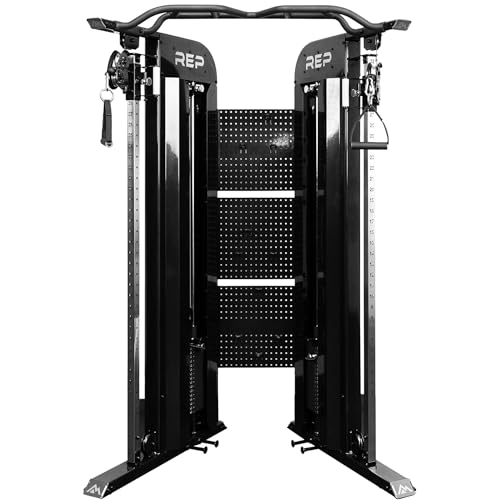
- 32 adjustable cable positions
- 170-lb dual stacks, upgradeable to 220 lb
- Built-in storage and band pegs
Best For: Cable-focused home and garage gyms wanting expandability
Enclosed Commercial-Style System
DONOW Smith Machine Home Gym System

- Smith machine, rack, crossover, and pull-up station
- 352-lb dual stacks with 2:1 ratio
- Includes multiple cable attachments
Best For: Spacious home gyms seeking a complete selectorized strength system
Compact Adjustable Pick
GMWD Wall-Mounted Cable Crossover

- 100+ exercise options in one station
- 26 height holes and 13 arm-angle settings
- Foldable design with 1:1 and 2:1 ratios
Best For: Space-conscious home gyms needing broad adjustability
Traditional Full-Width Pick

- 190-pound weight stack
- High and low pulleys swivel over 180 degrees
- 10-year frame warranty
Best For: Spacious home or garage gyms
Heavy-Load Space Saver
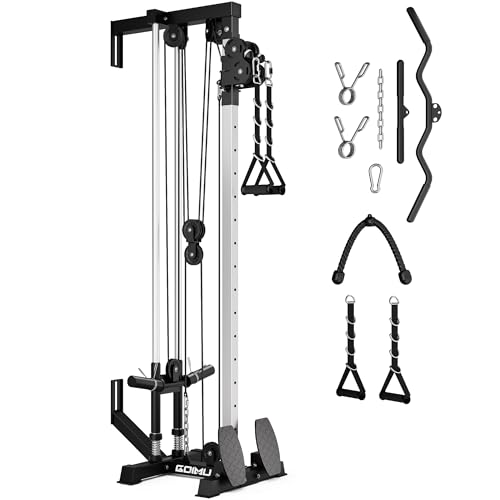
- 300-pound maximum weight recommendation
- 17 positions with independent pulleys
- Compact wall-mounted design
Best For: Small gyms needing higher-load cable training
Commercial-Grade Versatility

- Dual 180-lb stacks with 17 cable positions
- 11-gauge steel and aluminum pulleys
- Includes handles and exercise diagram
Best For: Full-body training with commercial-style construction
Wall-Mounted Space Saver
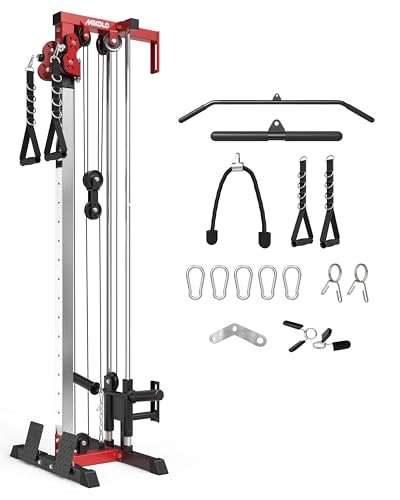
- Compact 26.9-by-25.6-inch footprint
- 19 pulley height positions
- Includes three attachments and plate sleeves
Best For: Small home or garage gyms
Storage-Friendly Trainer
Mikolo Functional Cable Crossover

- 17 positions per pulley and 350-lb capacity
- Includes pulldown, row, strap, and pull-up options
- Built-in hooks and weight storage
Best For: Organized full-body home workouts
Reliable Dual-Stack Training – Body-Solid Powerline Cable Crossover
The Body-Solid Powerline is a sturdy option for shoppers comparing cable crossover machines for home gyms. Its dual independent weight stacks support isolateral movements, while the high- and low-pulley layout accommodates a broad range of full-body exercises.
Best For: Home gyms that want dedicated cable resistance and extensive exercise variety.
Pros:
- Includes two 160-pound weight stacks with a 1/2:1 weight ratio.
- Supports exercises ranging from crossovers and presses to rows, pulldowns, and leg kickbacks.
- Heavy-duty steel construction with a 10-year frame warranty.
- Wide frame provides a stable training platform.
Cons:
- Large 42.3-by-62.6-by-83-inch footprint may require substantial space.
- At 476 pounds, it is difficult to reposition after assembly.
- Parts warranty is limited to one year.
This is a practical pick when cable exercise variety and a substantial, commercial-style build matter more than portability. Measure your available space carefully before buying.
Space-Saving Strength Hub – SunHome Smith Machine
The SunHome combines a Smith machine, power cage, lat pulldown, and cable crossover-style butterfly station in one unit. For shoppers considering cable crossover machines for home gyms, it offers a broad training setup with built-in storage and a rolling-bearing pulley system.
Best For: Solo lifters who want a multipurpose strength station with Smith-machine safety features.
Pros:
- Combines Smith machine, squat rack, cable system, butterfly station, and pull-up functionality.
- Auto-lock safety hooks are designed to support solo lifting.
- Rolling-bearing pulleys are intended to provide smoother, quieter operation.
- Includes six plate-storage posts, a barbell-storage post, and accessory hooks.
Cons:
- Its roughly 72-by-60-by-90-inch dimensions demand significant floor and ceiling space.
- The 440-pound unit may be challenging to assemble or move.
- Warranty coverage is listed at one year.
Choose this model if you want one large station to cover barbell, Smith-machine, cable, and rowing movements. Its footprint makes careful room planning especially important.
Precision Cable Positioning – REP Fitness Arcadia Functional Trainer
The REP Fitness Arcadia is a focused functional trainer for shoppers seeking cable crossover machines for home gyms without a full Smith-machine setup. Its 32 cable positions, dual stacks, and optional resistance upgrades provide flexible positioning for both large and small-muscle exercises.
Best For: Home or garage gyms that prioritize adjustable cable positioning and compact functional-training versatility.
Pros:
- Offers 32 cable positions for customized movement paths.
- Dual 170-pound stacks can be upgraded to 220 pounds each.
- Includes 5-pound add-on weights for smaller resistance adjustments.
- Built-in storage and integrated band pegs expand organization and training options.
Cons:
- Only two steel D-handles are included; many attachments are optional.
- Attachment packages and weight-stack upgrades increase the total cost.
- Its 35.8-by-55.3-by-80.8-inch size still requires dedicated space.
The Arcadia is a strong fit for users who value precise cable height adjustments and future expandability. Budget for additional attachments if you want a more complete exercise library.
Enclosed Commercial-Style System – DONOW Smith Machine Home Gym System
The DONOW Smith Machine packages a Smith bar, power rack, dual cable crossover, and pull-up station into one enclosed-weight-stack system. Among cable crossover machines for home gyms, it stands out for combining substantial resistance with a tidy design that keeps the stacks and cables contained.
Best For: Lifters wanting a comprehensive home gym with selectorized cable resistance and Smith-machine training.
Pros:
- Combines a Smith machine, power rack, dual cable crossover, and multi-grip pull-up station.
- Includes 352-pound weight stacks with a 2:1 cable ratio.
- Enclosed stacks help keep cables and weights contained.
- Includes cable handles, lat pulldown bar, cable bar, bicep rope, and ankle strap.
Cons:
- Large 54.7-by-78.58-by-88-inch footprint requires a spacious training area.
- Ships in eight boxes, which may complicate delivery and assembly.
- Its extensive all-in-one design may be more equipment than cable-only users need.
This model makes sense when you want to replace several strength stations with one substantial system. Verify doorway access, ceiling clearance, and assembly space before ordering.
Compact Adjustable Pick – GMWD Wall-Mounted Cable Crossover
The GMWD is a practical choice among cable crossover machines for home gyms when you want broad exercise variety without giving up much floor space. Its wall-mounted, foldable design offers adjustable arm positions, dual cable ratios, and included attachments for full-body training.
Best For: Space-conscious home-gym owners who want versatile cable training and a fold-away setup.
Pros:
- Supports more than 100 exercises, including flys, presses, pulldowns, curls, and woodchoppers.
- Offers 26 height adjustment holes, 13 arm-angle settings, and 180-degree movement.
- Switches between 2:1 and 1:1 cable ratios and includes several useful attachments.
- Folds against the wall and includes mounting hardware for wood and concrete surfaces.
Cons:
- Wall mounting is required, so installation needs a suitable structural surface.
- At 165 pounds, assembly and mounting may require additional help.
- The listed warranty is one year.
With a 350-pound maximum weight recommendation and extensive adjustability, the GMWD emphasizes versatility in a relatively compact footprint. Confirm your wall structure and available height before buying.
Traditional Full-Width Pick – Body-Solid Functional Trainer
The Body-Solid Best Fitness Functional Trainer is a traditional, full-width option among cable crossover machines for home gyms. It combines high and low pulleys, smooth swiveling movement, and a 190-pound weight stack for a wide range of strength exercises.
Best For: Dedicated home or garage gyms with room for a broad, freestanding-style cable crossover.
Pros:
- Provides high and low pulley exercises for chest, shoulders, back, arms, legs, and core.
- Top and bottom pulleys swivel through more than 180 degrees.
- Uses nylon-bushing technology and eight sealed ball-bearing, high-resin pulleys.
- Includes a 190-pound weight stack and a 10-year frame warranty.
Cons:
- Its approximately 112-inch width requires substantial floor space.
- The listed maximum weight recommendation is 133 pounds.
- Only one year of parts coverage is specified.
This model suits buyers prioritizing a broad exercise station and established construction features over compactness. Measure carefully, since its wide frame can dominate a smaller room.
Heavy-Load Space Saver – GOIMU WM1 Cable Station
The GOIMU WM1 is designed for compact home gyms and garages that still need substantial cable-training capability. This wall-mounted station has 17 height positions, dual independent pulleys, a removable footplate, and selectable 1:1 or 2:1 resistance ratios.
Best For: Space-limited users who want a wall-mounted station rated for up to 300 pounds.
Pros:
- Combines crossover, lat pulldown, rowing, curls, and other cable exercises in one station.
- Provides 17 height positions and independent pulleys for varied training angles.
- Supports both 1:1 and 2:1 cable ratios for heavier lifts or lighter-volume work.
- Compact wall-mounted dimensions measure approximately 24.8 by 18.11 by 78.74 inches.
Cons:
- Installation is intended for concrete or masonry walls according to the supplied notes.
- Wall mounting may be less suitable for users unable to modify their space.
- The product information lists a two-year warranty, shorter than some long-frame-warranty competitors.
The WM1 stands out for combining a small stated footprint with a 300-pound maximum weight recommendation. Verify the wall type, ceiling clearance, and installation requirements before committing.
Commercial-Grade Versatility – Compact Functional Trainer
For shoppers comparing cable crossover machines for home gyms, this functional trainer stands out as a substantial all-in-one setup. It combines dual 180-pound weight stacks, 17 cable positions, and a compact 65-by-35-inch footprint for varied strength workouts.
Best For: Home lifters who want a durable, full-body functional trainer with integrated weight stacks and precise cable adjustments.
Pros:
- Dual 180-pound stacks and 17 adjustable cable positions support extensive exercise variety.
- 11-gauge steel construction, aluminum pulleys, and a chip-resistant matte finish are designed for demanding use.
- Includes D-handles, additional grip options, and a mountable 15-exercise diagram.
- Three-year parts and lifetime frame warranty are listed in the product details.
Cons:
- At 855 pounds, it is considerably heavier and less portable than many home-gym cable stations.
- Its 84.9-inch height and 65-inch width require careful space planning.
- The 2:1 resistance ratio means the stated stack weight does not equal the direct resistance at the handle.
This is the most substantial option in the group, suited to buyers prioritizing commercial-style construction, integrated stacks, and adjustment range over easy installation or portability.
Wall-Mounted Space Saver – Mikolo Cable Station
This Mikolo station is a practical choice for cable crossover machines for home gyms where floor space is limited. Its wall-mountable design measures 26.9 by 25.6 inches and provides dual adjustable pulleys with 19 height positions.
Best For: Compact home, garage, or office gyms that need plate-loaded cable training without a large floor footprint.
Pros:
- Wall-mounted format is designed to fit corners and conserve floor space.
- Dual pulleys offer 19 height positions for unilateral and bilateral exercises.
- Includes a lat bar, cable bar, triceps rope, adjustable strap handles, and sleeves for 1- and 2-inch plates.
- H-shaped base, 14-gauge steel, and cables rated at 2,200 pounds tensile strength support stability and durability.
Cons:
- Wall installation adds setup requirements compared with freestanding equipment.
- Plates appear to be required separately because the unit is plate-loaded.
- The listed component replacement service is eight months, while the product details list a two-year warranty.
Choose this model when conserving space is the priority. Its included attachments and adjustable pulley system offer broad functionality, but buyers should plan for secure installation and compatible weight plates.
Storage-Friendly Trainer – Mikolo Functional Cable Crossover
Among cable crossover machines for home gyms, this Mikolo functional trainer balances a compact corner-friendly design with high- and low-pulley training. It supports up to 350 pounds, offers 17 height positions per side, and includes storage for attachments and plates.
Best For: Home gym users seeking a freestanding cable machine for pulldowns, rows, cable exercises, and pull-ups with built-in organization.
Pros:
- Compact design occupies approximately 20 square feet and measures 52 by 56 by 82 inches.
- Each pulley has 17 height positions for flexible exercise setup.
- Includes a lat pulldown bar, row bar, two strap handles, pull-up bar, and low pulley system.
- Storage hooks and two weight-storage poles help organize attachments and plates.
Cons:
- It is plate-loaded, so compatible weight plates are an additional consideration.
- Its 16-gauge steel frame is lighter-gauge than the 11-gauge frame of the commercial functional trainer above.
- The 52-by-56-inch footprint may require more floor space than a wall-mounted station.
This model is a well-rounded option for buyers who want multiple cable exercise paths and useful storage in one freestanding unit. Its 350-pound capacity and included attachments make it adaptable for general home strength training.
How We Picked the Best Cable Crossover Machines for Home Gyms
We focused on the features that most affect everyday training: pulley adjustability, cable travel, frame design, resistance capacity, attachment options, and installation demands. The lineup includes wall-mounted stations for smaller rooms, freestanding functional trainers for greater exercise variety, and Smith machine systems for buyers who want a more complete strength-training center.
We also considered whether each design suits beginners, experienced lifters, or shared home gyms. A machine should offer smooth, predictable cable movement and enough adjustment range to support exercises such as flyes, rows, face pulls, presses, curls, and triceps work.
Quick Comparison
- Best for compact rooms: Wall-mounted cable stations with adjustable pulley positions preserve floor space.
- Best for versatility: Functional trainers with dual independent pulleys support both bilateral and unilateral movements.
- Best all-in-one option: Smith machine systems combine cable work with guided squats, pressing, and rack exercises.
- Best for simpler setup: Freestanding machines generally require less wall reinforcement than mounted systems, though they need more floor area.
Key Buying Factors
Space and Installation
Measure ceiling height, usable floor area, and clearance around the pulleys. Wall-mounted models need a structurally suitable wall and careful anchoring; freestanding units need a stable, level surface and enough room for cable movement. Leave clearance behind and beside the machine for safe exercise positioning.
Adjustment Range and Cable Path
More pulley positions allow better alignment for different body sizes and exercises. Look for smooth vertical adjustment, swiveling arms or pulleys, and a useful high-to-low range. Independent sides are especially valuable for single-arm training and correcting strength imbalances.
Resistance and Included Equipment
Check whether the machine uses weight stacks or Olympic plates, and verify the listed resistance against your training goals. Weight stacks are convenient and quick to change, while plate-loaded systems can offer greater progression at a lower initial cost. Review which handles, bars, safety accessories, and storage pegs are included.
Stability and Maintenance
A heavy frame, wide base, and secure mounting improve stability during forceful pulls. Inspect cable routing, pulley bearings, adjustment hardware, and warranty coverage. Proper assembly and periodic checks of bolts and cables are essential for safe, quiet operation.
Who Should Buy Which Cable Crossover Machines for Home Gyms?
Choose a wall-mounted station if floor space is limited and you are comfortable completing a careful, permanent installation. Choose a freestanding functional trainer if you want broad exercise variety without modifying the wall. Choose a Smith machine combination if you want cable exercises alongside guided barbell training and have enough room for a larger system. Buyers prioritizing convenience should favor integrated weight stacks, while serious lifters who already own plates may prefer plate-loaded or expandable designs.