Staying active at home can be easier with a compact arm bike that supports gentle, seated movement. These exercisers can help seniors work the arms and shoulders while offering convenient options for low-impact routines.
We compared 10 popular models across adjustability, portability, stability, comfort, and ease of use to help you find a practical fit for everyday exercise or rehabilitation support.
Best 10 Arm Bikes for Seniors Picks for 2026
Best All-Around Choice
Vaunn Foldable Arm and Leg Pedal Exerciser

- Smooth magnetic motion with adjustable resistance
- Works for seated arm or leg exercise
- LCD tracks key workout metrics
Best For: Versatile home therapy and everyday seated exercise
Best Lightweight Option
RYGEO Foldable Arm and Leg Pedal Exerciser

- Fully assembled and quick folding
- Low resistance suits gentle exercise
- Compact design works under desks
Best For: Light recovery workouts and easy portability
Best for Physical Therapy
Adjustable Resistance Arm Cycle

- Designed for low-impact rehabilitation use
- Suction base supports stability on smooth tables
- Compact, lightweight, and assembly-free
Best For: Gentle arm mobility and recovery exercises
Best Budget-Friendly Tracker
MOMODA Foldable Arm and Leg Exercise Bike
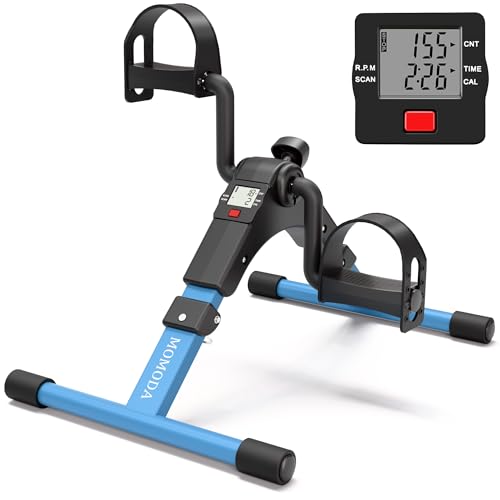
- LCD tracks time, count, RPM, and calories
- Low-impact arm and leg exercise
- Quick-folding frame saves storage space
Best For: Simple tracked workouts in compact homes
Stable Tabletop Pick

- Clamp design helps keep the unit from sliding
- Dial-adjustable resistance for gentle or harder sessions
- Fits tabletops 0.4–1.95 inches thick
Best For: Seated tabletop rehabilitation with added stability
Full-Body Seated Choice

- Works arms and legs while seated
- LCD tracks several workout metrics
- Steel frame with four stabilizing feet
Best For: Low-impact, seated full-body exercise at home
Portable Rehab Option
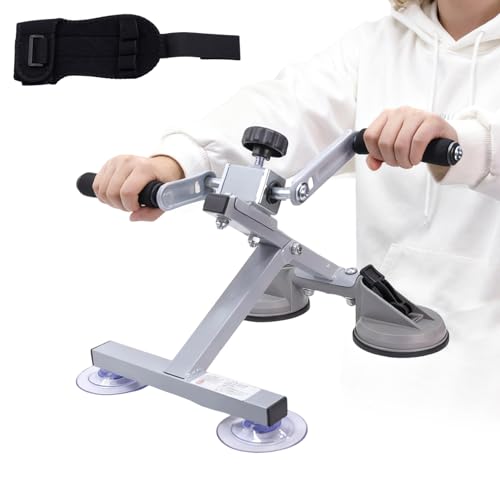
- Three modes include single-arm and synchronized training
- Adjustable resistance with three levels
- Lightweight 5-pound design for storage or travel
Best For: Versatile upper-body rehabilitation at home, work, or while traveling
Best Compact Rehab Pick

- Adjustable tension for rehab or strength work
- Compact 3.3-pound manual design
- Suction-cup base for flat surfaces
Best For: Seniors seeking simple, portable arm therapy
Best Total-Body Option
Senior Hand and Leg Pedal Exerciser

- Works arms, legs, and knees while seated
- Five resistance levels with adjustable height
- LCD tracking and suction-cup stability
Best For: Seniors wanting versatile seated exercise
Best Training Variety
Multifunction Anti-Slip Arm Bike

- Three arm-training methods
- Three adjustable resistance levels
- Suction cups and silicone pads reduce slipping
Best For: Users wanting adaptable arm rehabilitation exercises
Best All-Around Choice – Vaunn Foldable Arm and Leg Pedal Exerciser
For shoppers comparing arm bikes for seniors, the Vaunn offers a stable, low-impact option for seated arm or leg exercise. Its magnetic resistance, quiet operation, and readable LCD make it practical for home therapy, desk use, or casual daily movement.
Best For: Seniors and adults wanting a versatile arm-and-leg exerciser with adjustable resistance and workout tracking.
Pros:
- Smooth, quiet magnetic pedaling with 16 calibrated resistance levels.
- Can be used for both arm and leg workouts, including seated desk exercise.
- Large LCD displays speed, time, distance, and calories, with a scan function.
- Foldable, portable design includes a carry handle and adjustable pedal straps.
Cons:
- Its larger footprint may require more storage space than compact arm-only models.
- The display requires one AAA battery, though one is included.
The Vaunn is a strong all-purpose pick when stability, quiet performance, and resistance control matter more than having the smallest possible frame.
Best Lightweight Option – RYGEO Foldable Arm and Leg Pedal Exerciser
The RYGEO is a straightforward choice for shoppers seeking arm bikes for seniors that are easy to move, store, and use at low intensity. It arrives fully assembled, folds quickly, and uses a simple resistance knob for gentle cycling.
Best For: Seniors who want an uncomplicated, portable pedal exerciser for light arm, leg, knee, or shoulder workouts.
Pros:
- Designed for low-intensity arm and leg cycling, including recovery exercises.
- Low resistance is suitable for light exercise and easier pedaling.
- Folds quickly, arrives fully assembled, and fits under most desks.
- Pedal straps and foam-covered handles help improve comfort and foot security.
Cons:
- It does not include an electronic workout display.
- Resistance adjustment is manual and offers less documented control than multi-level magnetic models.
Choose the RYGEO if portability and simplicity are priorities, especially for gentle seated movement in a home or office setting.
Best for Physical Therapy – Adjustable Resistance Arm Cycle
This compact arm cycle is aimed at shoppers looking for arm bikes for seniors during physical therapy or rehabilitation. Its suction base is designed for smooth surfaces, while the adjustable tension knob supports gentle mobility work through moderate strengthening.
Best For: Stroke recovery, post-surgery shoulder rehabilitation, arthritis-focused mobility work, and users with limited strength.
Pros:
- Low-impact circular motion is designed for joint flexibility and motor-skill practice.
- High-adhesion suction cup helps secure the unit to smooth surfaces.
- Quiet, smooth, jerk-free rotation with adjustable resistance.
- Lightweight, compact, and ready to use without assembly.
Cons:
- The suction base is intended for smooth surfaces such as glass, marble, or polished wood.
- It is designed primarily for arm cycling rather than combined arm-and-leg exercise.
For rehabilitation-oriented use, this arm-only design offers a focused setup with a stability feature that may be useful when working at a table or desk.
Best Budget-Friendly Tracker – MOMODA Foldable Arm and Leg Exercise Bike
MOMODA Pedal Exerciser Leg and Arm Exercise Bike with LCD Monitor Foldable (Black/Blue)
Check Price On AmazonThe MOMODA combines a foldable frame with a basic LCD monitor, making it a practical option for shoppers comparing arm bikes for seniors. It supports low-impact arm or leg cycling and provides simple feedback for keeping track of each session.
Best For: Seniors who want a compact, easy-to-read exerciser with basic workout tracking.
Pros:
- Supports both arm and leg cycling for low-impact exercise.
- Adjustable tension knob includes low resistance for easier pedaling.
- LCD shows time, count, RPM, and calories.
- Quick-folding design is compact and easy to store.
Cons:
- The listed maximum weight recommendation is 30 kg, so suitability should be checked carefully before purchase.
- The LCD requires one AAA battery.
- The supplied notes do not specify a warranty.
The MOMODA is appealing for users who value straightforward tracking and foldaway storage, but its stated weight recommendation deserves particular attention during buying.
Stable Tabletop Pick – Clamp-On Arm Bike
For shoppers comparing arm bikes for seniors, this compact tabletop model stands out for its clamp-based stability and manually adjustable resistance. It attaches to tables between 0.4 and 1.95 inches thick, making it useful for seated rehabilitation or light arm-strength work.
Best For: Seniors and users needing a securely fixed tabletop exerciser for rehabilitation or gradual arm workouts.
Pros:
- Desktop clamp helps prevent sliding during use.
- Resistance adjusts with a simple tension dial.
- Ergonomic, sweat-resistant handle and silicone desk protection pad.
- Metal construction and self-powered manual operation.
Cons:
- Requires a compatible tabletop thickness of 0.4 to 1.95 inches.
- Offers two resistance levels rather than a broad range.
- Designed for tabletop use, so it is less portable than a freestanding pedal exerciser.
This is a practical choice when keeping the bike firmly in place is a priority. Check the table dimensions and consider whether its two resistance settings match the user’s rehabilitation or exercise needs.
Full-Body Seated Choice – Arm and Leg Pedal Exerciser
Among arm bikes for seniors, this seated pedal exerciser is designed for broader movement than an arm-only trainer. It supports arm and leg activity while seated, with low-impact motion intended for home exercise, mobility work, and recovery routines.
Best For: Seniors or physically weak users who want one seated device for gentle upper- and lower-limb exercise.
Pros:
- Supports arm, leg, hand, and knee exercise in one machine.
- Seated, low-impact format suits home workouts and recovery routines.
- LCD display tracks time, distance, swing counts, and calories.
- Thickened steel tubing and four corner feet provide a stable base.
Cons:
- At 15.4 pounds, it is less convenient to move than a lightweight tabletop arm bike.
- The supplied notes do not specify adjustable resistance levels.
- Its combined arm-and-leg motion may be more than users seeking only upper-body training need.
This model makes the most sense for households prioritizing versatility and seated full-body movement. Its display can help users monitor sessions, while the stable frame supports low-impact training on the floor.
Portable Rehab Option – Three-Mode Hand Bike
This portable hand bike is a flexible option for shoppers seeking arm bikes for seniors, especially when independent arm training or travel-friendly storage matters. It offers three training modes, adjustable resistance, and suction-cup stabilization for smooth-surface tabletops.
Best For: Seniors and rehabilitation users who need multiple upper-body training modes for home, office, or travel.
Pros:
- Supports single-arm, bilateral synchronized, and standard cycling modes.
- Three resistance levels allow some progression.
- Oversized suction cups and silicone pads are designed to improve tabletop grip.
- Weighs 5 pounds and assembles with the included hex wrench.
Cons:
- Suction-cup stabilization is intended for smooth surfaces and may be less versatile than a clamp.
- Only three resistance levels are specified.
- Its upper-body focus does not provide the lower-limb training of a full-body pedal exerciser.
Choose this model when portability and training variety outweigh the need for a permanent clamp attachment. Confirm that the intended tabletop is smooth enough for the suction cups to hold securely.
Best Compact Rehab Pick – Portable Suction-Cup Arm Bike
For shoppers comparing arm bikes for seniors, this compact manual model focuses on straightforward arm and shoulder movement at home. Its adjustable tension and suction-cup base make it a practical option for light rehabilitation or gradually building arm strength.
Best For: Seniors and users needing a small, simple arm exerciser for home physical therapy.
Pros:
- Adjustable resistance supports low-tension rehab and more challenging strength work.
- Strong suction-cup design helps secure it to a flat surface.
- Compact 3.3-pound design is easy to store and move.
- Manual operation requires no power source.
Cons:
- Only two resistance levels are listed.
- It is designed for arm exercise rather than full-body workouts.
This is a sensible choice when portability and uncomplicated operation matter most. Users should place it on a suitable flat surface and begin with the lower resistance setting.
Best Total-Body Option – Senior Hand and Leg Pedal Exerciser
Among arm bikes for seniors, this pedal exerciser stands out for combining seated arm and leg movement. It adds resistance bands, adjustable positioning, an LCD display, and a massage function for a broader home exercise routine.
Best For: Seniors who want seated upper- and lower-body exercise with progress tracking.
Pros:
- Supports arm, leg, and knee exercise from a seated position.
- Five resistance levels and adjustable height accommodate different setups.
- LCD display tracks time, counts, total counts, and calories.
- Steel frame, triangular base, and suction cups support stability.
Cons:
- At 15.4 pounds, it is less portable than compact arm-only models.
- Its 22-inch depth and 37.8-inch height require more storage space.
- The display requires a battery.
This model offers the most versatility of the three, particularly for users who want more than arm cycling. Its larger footprint and heavier build are trade-offs for the added stability and total-body capability.
Best Training Variety – Multifunction Anti-Slip Arm Bike
This multifunction arm bike gives shoppers looking at arm bikes for seniors three ways to train: one-hand cycling, synchronized same-direction cycling, or standard arm-bike exercise. Adjustable resistance and a grippy base make it suitable for gradual movement and strength work.
Best For: Seniors and rehabilitation users who value multiple arm-training modes.
Pros:
- Three training methods allow users to vary or adapt arm exercise.
- Three resistance levels support progression from mobility work to strength rebuilding.
- Two large suction cups and silicone pads help limit slipping on solid surfaces.
- Installation is designed to take about two minutes.
Cons:
- It is heavier than the smallest model at 5.3 pounds.
- The notes specify use on solid surfaces such as wood or marble, which may limit placement.
- It does not include an LCD workout display.
The varied training modes make this a flexible pick for users whose strength or mobility differs between arms. Its compact, self-powered design keeps setup simple, while the surface requirement is worth checking before purchase.
How We Picked the Best Arm Bikes for Seniors
We focused on features that matter most for safe, manageable home exercise: adjustable resistance, stable operation, simple controls, comfortable pedals or hand grips, and a compact design suitable for use at a table or while seated. We also considered foldability, portability, display functions, and whether a model can support both arm and leg exercise.
Because needs vary widely, this list includes basic pedal exercisers, clamp-style arm bikes, and multifunction rehabilitation equipment. Anyone recovering from an injury, surgery, or stroke should confirm suitable resistance and movement range with a healthcare professional before exercising.
Quick Comparison
| Type | Best For | Features to Look For |
|---|---|---|
| Standard pedal exerciser | Gentle seated movement | Wide base, adjustable tension, readable display |
| Foldable arm-and-leg bike | Small spaces and storage | Lightweight frame, carry handle, secure pedals |
| Desktop clamp arm bike | Focused upper-body work | Firm clamp, padded grips, smooth resistance |
| Therapy-oriented arm cycle | Rehabilitation routines | Multiple modes, fine adjustments, stable setup |
Key Buying Factors for Arm Bikes for Seniors
Resistance and Motion
Look for resistance that adjusts gradually rather than jumping abruptly between difficult levels. Smooth pedaling is especially important for seniors with limited strength, joint sensitivity, or reduced coordination.
Stability and Setup
A broad, non-slip base helps prevent sliding during use. Clamp-style models should attach securely to a sturdy table or desk, while floor models should remain planted on hard, level surfaces. Check the product dimensions before choosing a location.
Comfort and Accessibility
Large pedals, straps, padded handles, and an easy-to-read LCD can make regular use more comfortable. Controls should be straightforward, particularly for users who may have reduced dexterity or vision.
Portability and Storage
Foldable and lightweight designs are useful when the exerciser must be moved frequently or stored between sessions. However, a lighter frame may offer less stability, so balance portability against sturdiness.
Tracking Features
Basic displays may show time, revolutions, speed, or estimated calories. These readings can help monitor consistency, but they are estimates and should not replace professional rehabilitation guidance.
Who Should Buy Which Arm Bikes for Seniors?
Choose a simple pedal exerciser if you want affordable, low-impact movement while seated. A foldable arm-and-leg model is a practical choice for small homes or users who want one machine for upper- and lower-body exercise. Select a desktop clamp design when arm and shoulder training is the main priority and you have a secure table available.
For post-injury routines, stroke recovery, or structured physical therapy, prioritize models with adjustable resistance, stable construction, and multiple movement settings. If comfort, balance, or coordination is a concern, ask a clinician or physical therapist to recommend the appropriate equipment and starting intensity.