The best balance bike with handbrake helps a young rider build steering and balance skills while introducing controlled stopping. The right choice depends on more than wheel size: fit, weight, brake reach, tire type, and adjustability all affect confidence and safety.
This roundup compares 10 balance and convertible kids’ bikes, including lightweight models, adjustable designs, pedal-ready options, and bikes suited to different ages and riding stages.
Best 10 Balance Bike with Handbrake Picks for 2026
Best All-Terrain Pick

- Adjustable 15–21-inch seat height
- Front and rear hand brakes
- Wide air tires for mixed terrain
Best For: Growing children riding on pavement, grass, and gravel
Best Convertible Option

- Converts from balance to pedal bike
- Dual handbrakes on 18-inch version
- 98% pre-assembled with accessories
Best For: Families planning a gradual move to pedal riding
Best Toddler Starter

- Toddler-adapted mini V-brake
- Puncture-resistant all-terrain tires
- Includes kickstand, bell, and stickers
Best For: Children ages 2–5 starting balance-bike practice
Best Lightweight Choice

- Weighs just 6.4 pounds
- Child-sized rear handbrake
- Steering limiter supports stability
Best For: Small toddlers learning on paved paths
Best for Easy Setup
2-in-1 Balance Bike with Handbrake

- Converts between balance and pedal modes in about 60 seconds.
- Includes rear handbrake, training wheels, pedals, pump, and tools.
- Available in 12-, 14-, and 16-inch wheel sizes.
Best For: Families wanting one adjustable bike for multiple learning stages
Best for Everyday Use
KRIDDO Adjustable Balance Bike

- Made for early balance practice from about ages 2 to 5.
- Adjustable seat and handlebar support a growing fit.
- Puncture-resistant tires and a customizable name plate are included.
Best For: Toddlers starting balance-bike practice without pedal conversion
Quick-Change Option

- Switches between balance and pedal modes in about 50 seconds.
- Includes a handbrake, adjustable seat, and training-wheel components.
- Notes cite ASTM F963-17, CPSIA, and CPC safety certifications.
Best For: Beginner riders needing a fast-converting bike with braking support
Lightweight Trail Pick

- Lightweight 8.16-pound frame
- Air-filled all-terrain rubber tires
- Adjustable seat for ages 3-6
Best For: Young riders learning balance on varied outdoor surfaces
Most Versatile Choice
3-in-1 Montessori Balance Bike
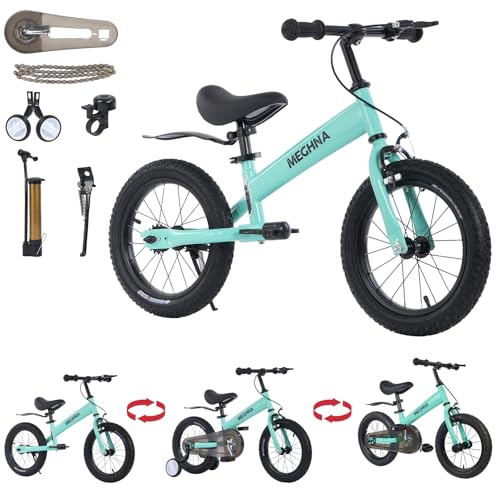
- Converts to balance bike, pedal bike, or tricycle
- Hand brake and pedal brake included
- Training wheels and accessories included
Best For: Families seeking multiple riding stages in one bike
Best Simple Pick
Retrospec Cub Plus Toddler Balance Bike

- Adjustable child-sized V-brake
- Low frame for easy mounting
- Air-filled tires and adjustable fit
Best For: Toddlers learning balance and stopping skills
Best All-Terrain Pick – Retrospec Cub Plus XL
If you want a balance bike with handbrake capability for a growing child, the Retrospec Cub Plus XL combines adjustable fit with wide air-filled tires. Its lightweight aluminum frame, low step-through design, and front and rear hand brakes make it practical for pavement, grass, and gravel.
Best For: Children who need an adjustable bike for mixed outdoor surfaces and extended use.
Pros:
- Adjustable seat and handlebars accommodate heights from 15 to 21 inches.
- Front and rear adjustable hand brakes are designed to fit small hands.
- Wide 14-inch air tires provide a smoother ride over bumps and varied terrain.
- Rust-resistant aluminum frame and low step-through design suit active outdoor use.
Cons:
- At 10.3 pounds, it is heavier than some toddler balance bikes.
- The larger 14-inch format may not suit very small riders.
The Cub Plus XL is a strong choice when fit flexibility and outdoor versatility matter more than having the lightest possible frame.
Best Convertible Option – RoyalBaby EZ Convertible Bike
The RoyalBaby EZ is a balance bike with handbrake functionality that can transition into a pedal bike. Its adjustable fit, low frame position, quick-release components, and dual handbrakes make it useful for children learning balance before moving to pedaling.
Best For: Families seeking one bike that supports both balance-bike practice and later pedal riding.
Pros:
- Converts from a balance bike to a pedal bike with a tool-less quick-release design.
- Dual handbrakes are included on the 18-inch version.
- Adjustable saddle and handlebars help young riders reach the ground confidently.
- Ships 98% pre-assembled and includes a bell, kickstand, reflectors, and water bottle.
Cons:
- Its carbon-steel frame and listed 13.77 kg weight make it substantially heavier than a lightweight toddler bike.
- The pedal-bike conversion may be more equipment than a beginner needs initially.
The EZ offers unusually long-term utility, but its heavier construction makes it better suited to children ready for a larger, more substantial bicycle.
Best Toddler Starter – KRIDDO Pro Balance Bike
For younger riders, the KRIDDO Pro is a balance bike with handbrake control sized for early practice. It pairs a toddler-adapted mini V-brake with thick puncture-resistant tires, a sturdy carbon-steel frame, and a low-key learning design for children ages 2 to 5.
Best For: Toddlers beginning to learn balance, steering, and independent stopping.
Pros:
- Mini V-brake provides braking power adapted for toddlers.
- Extra-thick puncture-resistant tires support riding on grass and sidewalks.
- Includes a kickstand, bell, customizable plate, stickers, and tool kit.
- Wide carbon-steel frame has a listed 110-pound weight capacity.
Cons:
- The carbon-steel construction may be less convenient to carry than an aluminum-frame model.
- Specific seat-height adjustment details are not provided in the supplied information.
The KRIDDO Pro is a practical first bike for toddlers who benefit from robust tires and an easy-to-use, child-focused handbrake.
Best Lightweight Choice – woom GO 1
The woom GO 1 is a particularly manageable balance bike with handbrake control for very young riders. At 6.4 pounds, it is easy for a toddler to control, while the child-sized rear V-brake, steering limiter, and adjustable saddle support confident early riding.
Best For: Very young or smaller toddlers who need a light, easy-to-control first bike.
Pros:
- Lightweight 6.4-pound aluminum frame is easy for children to maneuver.
- Child-sized rear handbrake teaches independent stopping from the start.
- Steering limiter helps reduce sudden jackknifing and wobble.
- Adjustable saddle fits children approximately 31 to 40 inches tall.
Cons:
- It is intended primarily for paved roads rather than rougher trails.
- The 12-inch design has a narrower age and size range than larger adjustable models.
The GO 1 stands out when low weight and controlled handling are top priorities, especially for toddlers developing their first riding skills.
Best for Easy Setup – 2-in-1 Balance Bike with Handbrake
This 2-in-1 model is a practical choice if you want a balance bike with handbrake that can later become a pedal bike. It converts in about 60 seconds and includes pedals, training wheels, a kickstand, and a pump.
Best For: Families seeking a grow-with-them bike for children approximately ages 2 through 8, with size selected according to height.
Pros:
- Converts between balance-bike and pedal-bike modes in about 60 seconds.
- Includes a sensitive rear handbrake, pneumatic rubber tires, and a carbon-steel frame.
- Adjustable seat and handlebar, plus included training wheels, pedal kit, pump, and tools.
- Available with 12-, 14-, and 16-inch wheels.
Cons:
- The product has several assembly steps, including the pedals, handlebar, and front wheel.
- Training wheels and pedals may be unnecessary if your child will use it only as a balance bike.
- The 360-degree steering feature may require a short adjustment period for new riders.
Its combination of a handbrake, adjustable fit, and included conversion accessories makes it a versatile option for children progressing from balancing to pedaling.
Best for Everyday Use – KRIDDO Adjustable Balance Bike
The KRIDDO is designed as an early-learning balance bike for toddlers rather than a pedal-bike conversion. Its sturdy carbon-steel frame, adjustable components, and puncture-resistant tires support simple push-and-glide practice, though the supplied details do not list a handbrake.
Best For: Toddlers ages 2 to 5 who are beginning to learn balance, walking, and steering on sidewalks or grass.
Pros:
- Designed for young riders to push, stand, and walk their way around.
- Adjustable handlebar and seat help accommodate growing children.
- Extra-thick puncture-resistant tires are intended for grass and sidewalks.
- Includes a removable name plate with stickers for personalization.
Cons:
- The supplied product information does not specify a handbrake.
- It does not convert to a pedal bike and does not include pedals or training wheels.
- Its toddler-focused design may offer less long-term versatility than a 2-in-1 model.
This is a straightforward first balance bike for toddlers, but shoppers specifically comparing balance bikes with handbrakes should verify the braking setup before buying.
Quick-Change Option – BIKEBOY 2-in-1 Balance Bike
The BIKEBOY combines balance-bike and pedal-bike modes in a frame designed for children ages 2 to 7. It switches modes in about 50 seconds and includes a handbrake, making it a relevant balance bike with handbrake for families planning a gradual transition to pedaling.
Best For: Beginner riders who need a convertible bike for balance practice, pedal-bike training, and paved-road or light trail use.
Pros:
- Quickly switches between balance-bike and pedal-bike modes.
- Includes a handbrake and training-wheel components.
- Carbon-steel frame, adjustable soft seat, rubber tires, and flexible steering support beginner use.
- Product notes cite ASTM F963-17, CPSIA, and CPC safety certifications.
Cons:
- The listing’s wheel-size information varies: it mentions 12-, 14-, and 16-inch options but specifies a 14-inch size in the details.
- The supplied notes do not clearly identify which accessories are included beyond the tool kit and training wheels.
- Its 40-inch minimum user-height listing may not suit every younger child despite the broad age range.
With fast mode changes, a handbrake, and a stated two-year warranty, this model is worth considering when versatility matters; confirm the exact wheel size and included configuration before ordering.
Lightweight Trail Pick – Ridego 14-Inch Balance Bike
The Ridego is a practical balance bike with handbrake alternative for children ages 3 to 6 who are learning steering and balance without pedals. Its lightweight frame, adjustable seat, and air-filled tires make it easy to carry and suitable for paved roads and unpaved trails.
Best For: Young riders who want a lightweight, pedal-free bike for varied outdoor surfaces.
Pros:
- Lightweight 8.16-pound glass-reinforced nylon frame with a 110-pound capacity
- Air-filled rubber tires provide shock absorption and anti-slip traction
- Adjustable 14.2- to 18.3-inch seat, padded saddle, footrest, and non-slip handlebars
Cons:
- Uses a coaster brake rather than a handbrake
- No pedals or drivetrain, so it cannot convert into a pedal bike
The Ridego emphasizes low weight and comfortable balance-bike practice. It is a strong option for families prioritizing portability and all-terrain tires, but shoppers specifically seeking a balance bike with handbrake should consider another model.
Most Versatile Choice – 3-in-1 Montessori Balance Bike
This 3-in-1 model is a balance bike with handbrake that can also become a pedal bike or tricycle. It includes adjustable fit components, training wheels, and dual braking, making it useful for children progressing through several riding stages.
Best For: Families wanting one bike that supports balance practice, tricycle riding, and early pedaling.
Pros:
- Converts among balance bike, pedal bike, and tricycle modes
- Includes both a hand brake and pedal brake
- Adjustable seat and handlebars accommodate growth
- Includes training wheels, kickstand, bell, mudguard, pump, and tools
Cons:
- At 20 pounds, it is heavier than a basic balance bike
- Conversion requires attaching or removing components
- Maximum recommended weight is 30 kg
The standout feature is its long-term versatility: children can start with balance training and later use pedals and training wheels. It is more feature-rich than a simple balance bike, though the added hardware may make it less convenient to carry.
Best Simple Pick – Retrospec Cub Plus Toddler Balance Bike
The Retrospec Cub Plus is a toddler-focused balance bike with handbrake, designed for ages 18 months to 4 years. Its low frame, adjustable V-brake, and adjustable seat and handlebar help beginners practice mounting, balance, and controlled stopping.
Best For: Toddlers who need an approachable first balance bike with a child-sized hand-operated brake.
Pros:
- Adjustable V-brake with child-sized levers teaches stopping technique
- Ultra-low frame makes mounting and dismounting easier
- Adjustable seat and handlebars extend usability as the child grows
- Air-filled tires support smoother rides on outdoor terrain
Cons:
- 12-inch wheels and toddler sizing limit its long-term use for older children
- No pedals, so it is intended for balance practice rather than pedal conversion
- Weighs 9 pounds, more than some minimalist balance-bike designs
For an early rider, the Cub Plus combines accessible geometry with a real adjustable V-brake. Its toddler-specific fit is the main advantage, while families shopping for a larger 14-inch bike or a pedal-conversion system may prefer another option.
How We Picked the Best Balance Bike with Handbrake
We focused on the features that matter most for early riders: appropriate sizing, manageable weight, seat-height adjustability, brake design, tire construction, frame durability, and ease of transition from balancing to pedaling. We also considered whether each bike suits a clearly defined age or skill range.
Because the selection includes both dedicated balance bikes and convertible models, we compared each design according to its intended use rather than treating every feature as interchangeable. A handbrake can be useful, but it must be easy for small hands to reach and operate.
Quick Comparison
| Best For | Look For | Why It Matters |
|---|---|---|
| First-time riders | Low adjustable seat and light frame | Makes mounting, turning, and recovery easier |
| Older or taller toddlers | Larger wheels and broader seat range | Provides more room to grow |
| Learning to pedal | Removable pedals or conversion kit | Extends the bike’s useful life |
| Frequent outdoor use | Durable frame, reliable tires, and handbrake | Improves control on varied surfaces |
Key Buying Factors for a Balance Bike with Handbrake
Fit and Adjustability
A child should be able to sit comfortably with both feet flat or nearly flat on the ground and maintain a slight bend in the knees. Check the listed seat-height range against the child’s inseam, not just age recommendations. Adjustable handlebars and seats can make a major difference as children grow.
Brake Reach and Control
Look for a properly sized hand lever that the child can squeeze without shifting grip or stretching fingers. A rear handbrake is generally more useful than a decorative brake, but children still need practice applying it gradually. Always confirm how the brake is adjusted and whether assembly is required.
Weight, Tires, and Construction
A lighter bike is easier for a small rider to steer, lift, and correct after a wobble. Air tires can provide a smoother ride outdoors, while foam or solid tires reduce maintenance. Consider the surfaces your child will use most often, along with frame materials and protective finishing.
Convertible Features
Pedal kits and training wheels can add versatility, but they may also increase weight and complexity. Choose a convertible bike when extending the bike’s lifespan is a priority; choose a simple no-pedal model when balance practice is the immediate goal.
Who Should Buy Which Balance Bike with Handbrake?
Choose a lightweight, low-seat balance bike for a first rider who is still developing confidence. Taller toddlers and preschoolers may benefit from a larger-wheel model with a wider adjustment range. Families expecting several learning stages should consider a 2-in-1 or 3-in-1 design, provided the conversion process is straightforward.
For children riding on sidewalks, driveways, or gentle paths, a model with a reachable rear handbrake can support early stopping skills. Whichever bike you choose, verify the fit, tighten all components after assembly, and pair every ride with a properly fitted helmet and active adult supervision.