Running can place repeated stress on the calves, Achilles tendons, plantar fascia, and feet. The right stretching tool can make post-run mobility work more consistent while helping you control range of motion and intensity.
We compared 10 calf stretchers for runners, from compact foot rockers and straps to sturdy slant boards. Use the guide below to match the design, adjustability, and support level to your routine.
Best 10 Calf Stretchers for Runners Picks for 2026
Trusted Foot Rocker

- Focused rocker design for lower-leg stretching
- Slip-resistant rubber strips
- Made in the U.S.A.; one-year warranty
Best For: Single-foot calf and plantar-fascia stretching
Adjustable Training Board
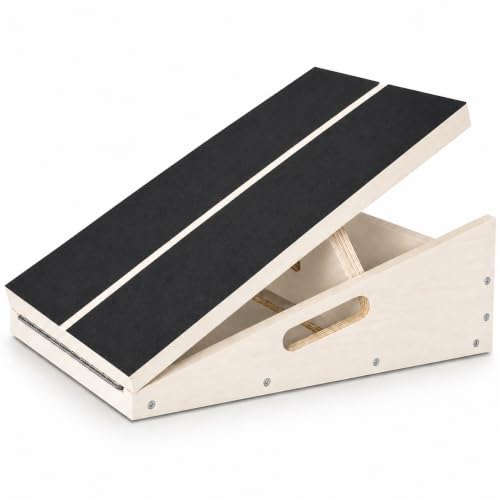
- Five angles from 15° to 35°
- 500-pound weight capacity
- Textured top, stable base, and carry handle
Best For: Adjustable stretching and strength routines
Dual-Foot Recovery Rocker

- Stretch both feet or one at a time
- Rocker design targets the lower legs
- Slip-resistant pads and QR guide
Best For: Bilateral calf stretching and foot recovery
Portable Foam Wedge Set

- Five adjustable angle positions
- Lightweight, foldable, and easy to clean
- Supports up to 960 pounds
Best For: Portable calf stretching and mobility workouts
Best Adjustable Pick
ProStretch Plus Calf Stretcher

- Adjustable heel rest controls stretch intensity
- Removable toe lift targets toes and plantar fascia
- Fits shoes up to size 14; supports up to 300 lb
Best For: Runners wanting customizable calf and foot stretching
Best for Strength and Stretching
PowerStep UltraFlexx Foot Rocker

- Stretches and strengthens the foot and lower leg
- Non-skid rocker bottom supports stability
- Targets calf, Achilles, plantar fascia, and shin-splint discomfort
Best For: Runners combining mobility work with lower-leg strengthening
Best Simple Home Option

- Curved, angled design supports a deep lower-leg stretch
- Nonslip surface promotes stability
- Supports up to 300 lb and shoes up to US 12.5
Best For: Home users wanting simple calf and foot mobility work
Best Slant-Board Pick
Adjustable Calf Stretching Slant Board

- 1,000-pound maximum weight recommendation
- Supports calf, ankle, balance, and squat work
- Firm EVA platform for stability-focused stretching
Best For: Runners who prefer a sturdy platform for stretching and mobility drills
Best Controlled-Stretch Pick
Foot and Calf Fascia Stretching Strap

- Six loops for adjustable stretch control
- Wide foot strap and cradle-style design
- Targets calves, feet, hamstrings, and hips
Best For: Runners who want a lightweight, adjustable rehabilitation strap
Best Portable Pick
Comness Foot and Calf Stretching Strap
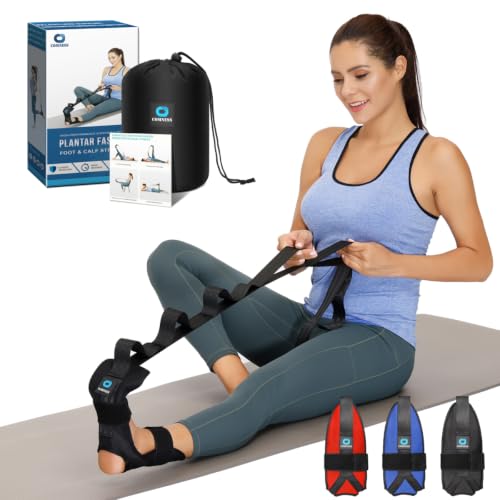
- Six-loop design supports varied positions
- Includes a carrying pouch for travel
- Works on feet, calves, hamstrings, thighs, and back
Best For: Runners who need versatile stretching equipment on the go
Trusted Foot Rocker – ProStretch Original
For runners looking for calf stretchers for runners, the ProStretch Original uses a compact rocker design to position the foot for a focused lower-leg stretch. Its slip-resistant rubber strips and included stretching guide make it practical for regular use at home or after training.
Best For: Runners and active adults who want a lightweight, single-foot rocker for tight calves, plantar fasciitis, or lower-leg mobility work.
Pros:
- Rocker design helps isolate the lower-leg muscles, tendons, and ligaments.
- Slip-resistant pads help limit movement during stretching.
- Made in the U.S.A. and includes a one-year warranty.
- Compact 14-ounce design is easy to store.
Cons:
- Fits adult shoes up to size 12.
- Recommended weight limit is 250 pounds.
- Requires rubber-soled athletic shoes and socks.
This is a focused option rather than a multipurpose balance board. Choose it if you value a simple, guided rocker stretch and primarily want to work one foot at a time.
Adjustable Training Board – Wooden Slant Board
This wooden slant board is a versatile choice among calf stretchers for runners, with five angle settings from 15° to 35°. The broad platform supports stretching, ankle mobility, calf raises, squats, and warm-ups at home or in the gym.
Best For: Runners and fitness users who want adjustable incline levels and a sturdy board for stretching and strength routines.
Pros:
- Five adjustable angles allow gradual progression.
- 500-pound capacity supports stretching, calf raises, and strength work.
- Textured top and slip-resistant base help provide secure footing.
- Side handle, exercise guide, and three-year warranty add convenience.
Cons:
- At 3.85 kg, it is heavier than foam or rocker-style options.
- The wooden platform is less compact than a small single-foot stretcher.
- The listed size is 16 by 12.5 by 6 inches.
Its adjustable angles and broad wooden surface make it the most flexible pick for users who want calf stretching to fit into a wider mobility or strength program.
Dual-Foot Recovery Rocker – ProStretch Double
The ProStretch Double is designed for runners who want calf stretchers for runners that can address both sides at once. Its dual-foot rocker can be used simultaneously or one foot at a time, while slip-resistant pads help keep the device in place.
Best For: Active adults who want a dual-foot rocker for tight calves, plantar fasciitis, Achilles tendon concerns, or faster bilateral stretching.
Pros:
- Supports stretching both feet simultaneously or separately.
- Rocker shape positions the feet for a focused stretch.
- Slip-resistant pads help reduce sliding.
- Includes a QR-code stretching guide and one-year warranty.
Cons:
- Fits adult shoes up to size 12.
- Recommended weight limit is 250 pounds.
- Users should wear rubber-soled athletic shoes.
Compared with the single version, the dual rocker is better suited to symmetrical routines and time-efficient stretching. It remains a specialized foot rocker rather than a general-purpose slant board.
Portable Foam Wedge Set – Squat Wedge Slant Board
For runners who need portable calf stretchers for runners, this EPP foam wedge set offers multiple incline configurations in a lightweight, wipe-clean format. The boards can be used individually or together for calf stretching, squats, ankle mobility, and physical-therapy-style exercises.
Best For: Runners and fitness users who prioritize portability, adjustable angles, and a lightweight wedge for home, office, or travel workouts.
Pros:
- Five listed angle positions range from 8.5° to 180°.
- Lightweight design weighs about 10.56 ounces.
- Supports up to 960 pounds according to the supplied specifications.
- Waterproof, oil-proof surface is easy to clean.
Cons:
- The supplied notes describe a foam wedge set rather than a single broad platform.
- One-inch angle configurations may provide less surface area than a full-size slant board.
- Includes a one-year after-sales service period.
This is a strong portability pick for runners who want to vary incline levels and pack away their stretching equipment easily. Its modular design also adds exercise versatility beyond calf stretching.
Best Adjustable Pick – ProStretch Plus Calf Stretcher
For runners comparing calf stretchers for runners, the ProStretch Plus stands out for its adjustable heel rest and removable toe lift. It is designed to target tight calves, feet, and the plantar fascia while providing a stable platform for controlled stretching.
Best For: Runners who want customizable calf and foot stretching, especially those managing tight calves or plantar fascia discomfort.
Pros:
- Adjustable heel rest lets you increase or decrease stretch intensity.
- Removable toe lift adds an advanced stretch for the toes and plantar fascia.
- Wide platform with slip-resistant pads helps limit sliding.
- Fits adult shoes up to size 14 and supports up to 300 pounds.
Cons:
- Requires socks and athletic shoes with rubber soles.
- The larger adjustable design may be more equipment than casual users need.
Its customization and included stretching guide make the ProStretch Plus a strong choice for runners building a repeatable mobility routine. The one-year warranty and U.S. manufacturing are additional advantages.
Best for Strength and Stretching – PowerStep UltraFlexx Foot Rocker
The PowerStep UltraFlexx is a practical option for runners seeking calf stretchers for runners that also address foot and lower-leg conditioning. Its rocker shape holds the foot in position for stretching and strengthening, with a non-skid base for stability.
Best For: Runners who want one compact rocker for calf, foot, Achilles tendon, and shin-splint-related stretching.
Pros:
- Designed to stretch and strengthen muscles, ligaments, and tendons.
- Provides a deep stretch for the calf, foot, and lower leg.
- Non-skid rocker bottom helps maintain a stable position.
- Lightweight design weighs about 0.4 kg.
Cons:
- Recommended for use with sturdy athletic shoes.
- No adjustable heel rest or removable toe lift is listed.
With its emphasis on both mobility and strength, the UltraFlexx suits runners who want more than a basic static stretch. Its compact 10-by-5-inch profile also makes it convenient to keep in a home exercise area.
Best Simple Home Option – Calf Stretcher Foot Rocker
This blue foot rocker is a straightforward choice for runners comparing calf stretchers for runners for home use. Its curved, angled design positions the foot for a deeper stretch across the calves, ankles, and feet, while the nonslip surface supports a steady routine.
Best For: Home users seeking a simple, supportive rocker for lower-leg mobility and stretching.
Pros:
- Targets the calves, ankles, and feet to support range of motion.
- Curved surface is designed to contour to the foot and reduce joint strain.
- Supports up to 300 pounds.
- One-size design accommodates shoes up to US 12.5.
Cons:
- Smaller shoe-size range than some competing options.
- Includes a 180-day warranty.
- Plastic construction has fewer listed customization features.
The rocker’s simple angled construction makes it approachable for beginners and useful for regular home exercise. It is best suited to shoppers who prioritize basic positioning, stability, and broad lower-leg coverage over adjustability.
Best Slant-Board Pick – Adjustable Calf Stretching Slant Board
For runners who want a stable option among calf stretchers for runners, this EVA slant board provides a firm angled surface for calf stretching, ankle-mobility work, balance drills, and squat positioning. Its 1,000-pound maximum weight recommendation also makes it suitable for strength and rehabilitation routines.
Best For: Runners seeking a sturdy slant board for calf flexibility, ankle mobility, balance, and lower-leg recovery exercises.
Pros:
- Supports up to 1,000 pounds according to the supplied specifications.
- Can support work targeting calf tightness, Achilles tendon discomfort, plantar fascia discomfort, and shin splints.
- Also supports balance, flexibility, vertical-jump, squat, and ankle-mobility training.
Cons:
- The fixed board format is less portable than a stretching strap.
- Its 16-by-6.5-inch platform may offer less positioning flexibility than a long strap.
This is the most stability-focused choice of the three. Choose it if you prefer a solid platform and want to combine calf stretching with balance or squat work.
Best Controlled-Stretch Pick – Foot and Calf Fascia Stretching Strap
This stretching strap is a practical choice among calf stretchers for runners who want to control the intensity and duration of each stretch. Its six adjustable loops, wide foot strap, and 60-inch nylon design support targeted work for the calf, plantar fascia, hamstrings, thighs, hips, and ankle area.
Best For: Runners who want an adjustable strap for controlled calf, foot, hamstring, and Achilles stretching at home or during rehabilitation.
Pros:
- Six adjustable loops allow more precise control of stretch intensity and position.
- The cradle design and extra-wide foot strap are intended to provide secure positioning.
- Supports stretching for plantar fascia discomfort, heel spurs, calf tightness, ankle sprains, and Achilles tendonitis.
- Lightweight at 6.4 ounces and long enough for varied stretching positions.
Cons:
- It requires active use rather than providing a hands-free stretch.
- The one-size design may not provide the same fit customization as a platform.
With multiple loops and a secure foot cradle, this is the strongest option for runners who want to gradually adjust their stretch rather than rely on a fixed angle.
Best Portable Pick – Comness Foot and Calf Stretching Strap
The Comness strap is a versatile option among calf stretchers for runners, with a six-loop webbing design that supports different foot, calf, hamstring, thigh, and lower-back positions. A carrying pouch makes it convenient to keep in a gym bag, office, or travel luggage.
Best For: Runners, athletes, and travelers who want a portable strap for general lower-body stretching and mobility work.
Pros:
- Six-loop construction supports multiple stretching positions and orientations.
- Can be used for the foot, heel, hamstring, thigh, calf, and lower back.
- Portable design includes a carrying pouch for use at home, work, the gym, or while traveling.
- Suitable for beginners, athletes, physical therapists, and recovering users.
Cons:
- It does not provide the rigid support of a slant board.
- Users must actively hold and position the strap during stretching.
- The one-size design may require adjustment for different users and exercises.
This is the most travel-friendly pick in the group. Choose it if versatility and portability matter more to you than having a fixed, stable stretching surface.
How We Picked the Best Calf Stretchers for Runners
We focused on tools that make calf and foot stretching easier to perform consistently at home, before training, or after a run. The selection includes dedicated calf stretchers, slant boards, rocker-style devices, and stretching straps so runners can compare different approaches.
Our main criteria were adjustability, stability, portability, comfort, construction, stated weight capacity, and suitability for common mobility concerns such as tight calves, plantar fascia discomfort, Achilles irritation, and shin tightness. Product claims should not replace guidance from a qualified clinician, especially when pain is persistent or follows an injury.
Quick Comparison
| Type | Best For | Main Advantage | Potential Limitation |
|---|---|---|---|
| Slant board | Controlled standing stretches | Stable platform and adjustable foot angle on some models | Less portable and requires balance |
| Foot rocker | Simple foot and calf mobility | Compact, quick to use, and easy to store | Usually offers less angle customization |
| Stretching strap | Seated or lying-down stretching | Lightweight and highly portable | Requires active control and proper positioning |
| Single or double calf stretcher | Targeted home routines | Designed specifically for calf and foot positioning | Fit and stability vary by design |
Key Buying Factors for Calf Stretchers for Runners
Angle and Intensity Control
A fixed-angle board is simple, but an adjustable model can accommodate different flexibility levels and let you progress gradually. Rockers and straps also provide control, although the user determines much of the stretch intensity.
Stability and Weight Capacity
Standing devices should stay planted during use and provide enough surface area for your feet. Check the manufacturer’s weight rating, base design, traction, and whether the platform feels secure on your floor.
Portability and Storage
Choose a strap or compact rocker if you travel, commute, or want a tool for the gym. A wooden or heavy-duty slant board may be better for a dedicated recovery area but can take up more space.
Comfort and Foot Fit
Look for a footbed, edge, or strap that supports your foot without sharp pressure points. Runners with larger feet should verify platform dimensions, while anyone with balance concerns may prefer seated stretching or a design with extra support.
Construction and Cleaning
Durable wood, reinforced plastic, nonslip surfaces, and washable straps can improve long-term value. Avoid using a device on a slippery surface, and inspect it regularly for cracks, stretched webbing, or worn traction.
Who Should Buy Which Calf Stretchers for Runners?
- Choose a slant board if you want a stable, standing calf stretch and have room for a larger tool.
- Choose a rocker if you want quick foot-and-calf mobility work with minimal setup.
- Choose a strap if portability, seated stretching, and precise hands-on control matter most.
- Choose an adjustable or double stretcher if you want to vary the angle, work both legs, or build a more structured recovery routine.
Start with gentle tension rather than forcing a deep stretch, and stop if you experience sharp pain, numbness, or worsening symptoms. For ongoing pain or suspected tendon or fascia injury, consult a medical professional before selecting a stretching device.