The best medicine balls make it easier to add resistance, power, and instability to strength and conditioning workouts without requiring a large home gym. The right choice depends on more than weight: shell texture, bounce behavior, durability, and intended exercises all matter.
We compared 10 options across weighted training, wall-ball movements, slams, and general fitness so you can choose a medicine ball that fits your space, programming, and experience level.
Best 10 Medicine Balls Picks for 2026
Reliable Core Training
Amazon Basics 10-Pound Medicine Ball

- 10-pound rubber ball for full-body training
- Textured surface and labeled weight
- Bounces off hard surfaces
Best For: Single-ball core, balance, and strength workouts
Complete Home-Gym Setup
Lifeline Fitness Medicine Ball Set

- Five weights from 2 to 10 pounds
- Includes a tiered storage rack
- Light bounce and adjustable inflation
Best For: Multi-user home gyms and progressive training
Controlled Slam Training
ProsourceFit 20-Pound Slam Ball

- Sand-filled deadweight minimizes bounce
- Tire-tread grip for intense workouts
- Designed for slams and conditioning
Best For: Advanced strength and slam-ball training
Compact HIIT Conditioning
Amazon Basics 15-Pound Slam Ball

- 15-pound sand-filled slam ball
- PVC shell absorbs powerful impacts
- Textured surface limits slipping
Best For: HIIT, CrossFit, and explosive-power workouts
Dynamic Workout Pick
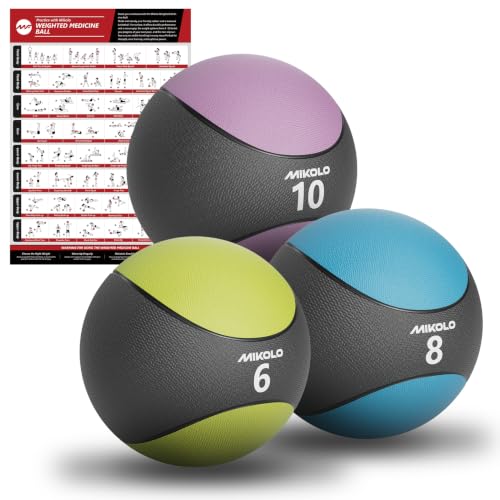
- Eight options from 2 to 12 pounds
- Textured rubber grip for dynamic drills
- Supports core stability and coordination
Best For: Explosive full-body workouts
Simple Starter Pick
Amazon Basics 6-Pound Medicine Ball

- Firm 6-pound rubber construction
- Lightly textured grip and labeled weight
- Works for tosses, twists, squats, and sit-ups
Best For: Classic core and full-body routines
High-Rep Wall Ball Pick

- 4–30 lb options in pound increments
- Textured shell for secure high-rep grip
- Built for wall work, not floor slams
Best For: Hyrox, CrossFit, and wall-ball conditioning
Everyday Training Value
Amazon Basics Weighted Medicine Ball

- 4-pound fixed-weight design
- Firm rubber construction can bounce
- Useful for core and full-body exercises
Best For: General strength, balance, and beginner workouts
Soft-Grip Progression Option

- 4–30 lb range for workout progression
- Textured vegan leather grip
- Designed for strength, balance, and recovery
Best For: Home training and controlled full-body workouts
Reliable Core Training – Amazon Basics 10-Pound Medicine Ball
This 10-pound medicine ball is a straightforward choice for home or gym workouts involving core strength, balance, and full-body conditioning. Its firm rubber construction, labeled weight, lightly textured surface, and ability to bounce off hard surfaces make it suited to classic medicine ball exercises such as twists, squats, sit-ups, and tosses.
Best For: Adults seeking a single 10-pound medicine ball for core work, strength training, and general fitness exercises.
Pros:
- Firm rubber construction with a lightly textured grip.
- Suitable for upper-body, lower-body, and full-body exercises.
- Can bounce off hard surfaces for toss-based workouts.
- Weight is labeled on both sides for easy identification.
Cons:
- Only available in a 10-pound weight in this listing.
- Its bounce may be less suitable for controlled deadweight slam training.
Choose this model if you want a clearly marked, versatile medicine ball for established exercise routines rather than a multi-weight set or dedicated non-bouncing slam ball.
Complete Home-Gym Setup – Lifeline Fitness Medicine Ball Set
This Lifeline Fitness set gives you five medicine balls ranging from 2 to 10 pounds, making it easier to adjust resistance as your workouts progress. The included tiered rack keeps the set organized, while rubber construction, lightly textured surfaces, light bounce, and adjustable inflation support varied home or gym training.
Best For: Households, home gyms, and training spaces that want multiple medicine ball weights with dedicated storage.
Pros:
- Includes 2-, 4-, 6-, 8-, and 10-pound balls.
- Comes with a tiered storage rack.
- Non-slip surfaces provide a firm grip during workouts.
- Light bounce and adjustable inflation offer some training flexibility.
Cons:
- The complete set weighs 30 pounds and requires more storage space than one ball.
- Its light-bounce design is not intended as a dedicated deadweight slam-ball setup.
The range of weights is the main advantage here, especially for users sharing equipment or progressing through different exercises. The rack adds practical value if you have room to keep the full set together.
Controlled Slam Training – ProsourceFit 20-Pound Slam Ball
This 20-pound ProsourceFit slam medicine ball is built for forceful throws, slams, presses, squats, and core exercises. Its sand-filled deadweight design minimizes bouncing and rolling, while the molded PVC shell and tire-tread surface provide impact resistance and traction during demanding conditioning sessions.
Best For: Experienced adults who want a heavy, non-bouncing ball for slams, strength work, and conditioning.
Pros:
- Sand-filled construction minimizes bounce and rolling.
- Tire-tread texture supports grip during intense or sweaty workouts.
- PVC rubber shell is designed to absorb repeated impacts.
- Suitable for throws, slams, squats, presses, and core work.
Cons:
- The 20-pound weight may be challenging for beginners; the notes recommend starting at 10 to 15 pounds for better control.
- Deadweight construction is less suited to bounce-based medicine ball drills.
For slam-focused training, the non-bouncing design helps keep the ball more controlled after impact. Consider a lighter option from the same range if you are new to slam-ball workouts.
Compact HIIT Conditioning – Amazon Basics 15-Pound Slam Ball
Amazon Basics Heavy-Duty Slam Medicine Ball for Exercise, Weighted Design, 15lb, Black
Check Price On AmazonThis 15-pound Amazon Basics slam medicine ball is designed for CrossFit, HIIT, and strength-training sessions that involve powerful impacts. Its sand-filled core and heavy-duty PVC construction absorb slams without unwanted bouncing, while the textured exterior helps maintain grip during dynamic movements.
Best For: Adults adding controlled slams, explosive-power drills, and core conditioning to home or fitness-center workouts.
Pros:
- Sand-filled core absorbs impacts and limits bouncing.
- Textured non-slip surface supports a secure grip.
- Balanced deadweight design suits controlled dynamic movements.
- Useful for core strength, explosive power, and cardiovascular endurance.
Cons:
- The 15-pound weight may be demanding for beginners.
- Its deadweight design is not intended for bounce-oriented drills.
This is a practical middle-weight slam ball for users who want one dedicated tool for HIIT and strength conditioning. Its non-bouncing behavior favors controlled repetitions over rebound exercises.
Progressive Training Pick – Core Weighted Medicine Ball
If you want medicine balls that can support gradual progression, the Core Weighted Medicine Ball offers weights from 4 to 30 pounds. Its textured vegan leather exterior provides a cushioned, non-slip grip for strength, balance, and recovery exercises.
Best For: Home exercisers who want one medicine-ball line with options for increasing workout intensity.
Pros:
- Available in ten weights, from 4 to 30 pounds.
- Textured vegan leather offers a cushioned, secure grip.
- Packed inner material is designed to maintain its shape through repeated use.
- Useful for strength training, balance work, and recovery exercises.
Cons:
- Not intended for slamming.
- The listed 8-pound version measures 7.9 inches in diameter, which may feel large for some users.
This is a versatile choice for buyers who value weight progression and a softer hand feel. Choose the weight that matches your current training level, then move up as your strength develops.
Dynamic Workout Pick – Mikolo Weighted Medicine Ball
The Mikolo Weighted Medicine Ball is built for dynamic medicine balls workouts, including presses, lunges, jumps, chest passes, and rotational movements. Its textured rubber surface is designed to provide grip during explosive training, with options from 2 to 12 pounds.
Best For: Users who want a rubber medicine ball for core stability, coordination, and fast-paced full-body exercises.
Pros:
- Eight weight options support gradual progression from 2 to 12 pounds.
- Textured rubber surface provides a secure grip.
- Suitable for exercises combining resistance with dynamic movement.
- Includes a one-year warranty according to the product notes.
Cons:
- Its weight range tops out at 12 pounds, limiting heavier training options.
- The supplied listing contains inconsistent warranty details, mentioning both one year and two years.
- The notes identify the supplied size as a 6-, 8-, and 10-pound configuration, so verify the selected option before ordering.
With its impact-resistant rubber construction and textured exterior, the Mikolo is a practical option for energetic drills and coordination-focused workouts. Confirm the desired weight and warranty terms before purchase.
Simple Starter Pick – Amazon Basics 6-Pound Medicine Ball
For straightforward medicine balls training, the Amazon Basics 6-pound model covers familiar exercises such as tosses, weighted twists, squats, and sit-ups. Its firm rubber construction, labeled weight, and lightly textured surface keep the design simple and practical.
Best For: Adults seeking a single 6-pound ball for core strength, balance, coordination, and general full-body workouts.
Pros:
- 6-pound weight suits a range of classic medicine-ball exercises.
- Firm rubber construction is sturdy and can bounce off hard surfaces.
- Lightly textured surface provides grip.
- Weight is labeled on both sides for easy identification.
Cons:
- Only one 6-pound weight is listed, so it does not provide built-in progression.
- At 7.6 inches in diameter, it may feel relatively large for some exercises or users.
This is a no-frills choice for buyers who already know which weight they need. It offers the essential features for traditional core and full-body routines without extra configuration.
High-Rep Wall Ball Pick – REP Fitness Medicine Ball
If you need medicine balls for wall ball shots, conditioning circuits, or high-repetition training, the REP Fitness Medicine Ball 2.0 offers weight options from 4 to 30 pounds. Its soft textured shell is designed for grip and controlled wall work rather than floor slams.
Best For: Hyrox and CrossFit-style wall balls, home gyms, and high-volume conditioning.
Pros:
- Available in pound increments from 4 to 30 pounds for gradual load selection.
- Soft textured shell supports a secure grip during sweaty, high-repetition sets.
- Balanced weight distribution and a wall-friendly profile provide predictable rebound.
Cons:
- Designed for walls and wall-ball targets, not floor slams.
- Only the ball is included.
This is a focused choice for athletes who prioritize wall-ball training and conditioning. Choose the weight that matches your current skill level, then progress as needed.
Everyday Training Value – Amazon Basics Weighted Medicine Ball
For straightforward medicine balls workouts, this 4-pound Amazon Basics model covers familiar movements such as tosses, twists, squats, and sit-ups. Its firm rubber construction and lightly textured surface make it a practical option for general strength and balance training.
Best For: Core exercises, full-body workouts, balance practice, and beginners seeking a fixed 4-pound load.
Pros:
- Suitable for upper-body, lower-body, and full-body exercises.
- Firm rubber construction can bounce off hard surfaces.
- Lightly textured surface provides a more secure grip.
Cons:
- Available here in one 4-pound weight, limiting progression with this ball alone.
- Its firm construction may not suit users seeking a soft medicine ball.
This model keeps the setup simple and covers a broad range of classic exercises. It is most useful when a moderate, fixed-weight ball is enough for your routine.
Soft-Grip Progression Option – Core Weighted Medicine Ball
These medicine balls are offered in weights from 4 to 30 pounds, making the Core model suitable for users who want to progress over time. The textured vegan leather surface adds a cushioned, non-slip feel for strength training, recovery, balance work, and other full-body exercises.
Best For: Home workouts, progressive strength training, balance exercises, and recovery-focused routines.
Pros:
- Wide range of weight options supports progression from light to heavy.
- Textured vegan leather provides a cushioned grip.
- Packed inner material is designed to maintain its shape through repeated use.
Cons:
- Not intended for slamming.
- The available sizes vary, so buyers should select the desired weight carefully.
This is a versatile option for people who want one product line to support changing workout demands. Its soft-touch construction is particularly appealing for controlled exercises where grip comfort matters.
How We Picked the Best Medicine Balls
We focused on the features that most affect everyday training: available weight ranges, grip and shell texture, construction, bounce or non-bounce behavior, and versatility. The selection includes standard weighted balls, slam balls, wall balls, and sets so different athletes can find a suitable format.
We also considered how well each option fits common use cases, including core exercises, rotational throws, partner work, conditioning circuits, functional training, and home-gym strength sessions. A ball designed for repeated slams is not automatically the best choice for wall throws or controlled Russian twists.
Quick Comparison
| Type | Best For | What to Check |
|---|---|---|
| Weighted medicine ball | Core work, carries, throws, and general strength | Grip, size, shell comfort, and weight progression |
| Slam ball | Power training, conditioning, and repeated floor slams | Non-bounce design, reinforced shell, and textured surface |
| Wall ball | Target throws, functional fitness, and high-repetition workouts | Soft exterior, consistent shape, and manageable diameter |
| Medicine ball set | Shared gyms or progressive programming | Storage, included weights, and value per ball |
Key Buying Factors for Medicine Balls
Choose the Correct Weight
For dynamic movements, select a weight you can move quickly while maintaining control. Beginners often benefit from a lighter ball for overhead work, rotational exercises, and repeated throws. Heavier options are better for slow core exercises, loaded carries, and strength-focused movements, but they can compromise technique if chosen too aggressively.
Match the Ball to the Exercise
Use a durable non-bounce slam ball for floor slams and explosive conditioning. A softer wall ball is generally more comfortable for target throws and high-repetition functional workouts. A standard weighted ball offers broader versatility, especially for partner passes, sit-up throws, lunges, and controlled core training.
Evaluate Grip and Construction
Textured rubber or treaded surfaces can improve control when hands are sweaty. Soft-touch coverings may feel better for catches, but they require appropriate indoor use and care. Check whether the ball is designed for impact, whether its seams are reinforced, and whether its diameter feels comfortable for your hands and training style.
Consider Your Training Space
Confirm that you have enough clearance for overhead throws and rotational movements. Slam balls reduce rebound risk, while bouncy balls may travel unpredictably. For apartment or indoor use, consider flooring, noise, and whether the manufacturer permits the intended impact exercises.
Who Should Buy Which Medicine Balls?
- New exercisers: Choose a lighter standard weighted ball with a comfortable grip and predictable handling.
- Conditioning-focused athletes: Select a non-bounce slam ball built for repeated impacts.
- Cross-training and functional fitness users: Look for a soft wall ball with consistent shape and a weight that supports high repetitions.
- Strength-focused users: Consider heavier weighted medicine balls for carries, controlled core work, and powerful throws.
- Families, coaches, or shared gyms: A medicine ball set provides more progression options and lets multiple users train at once.
When in doubt, prioritize the ball you can control through your full range of motion. A durable, appropriately weighted option will be more useful than a heavier model that limits technique or encourages unsafe movement.